Data is the new currency of business, and like any valuable asset, it needs strong protection. Yet many organizations still rely on local servers or hard drives vulnerable to theft, accidents, or natural disasters. That is where data backup and disaster recovery services can help by storing secure copies offsite and supporting faster recovery.
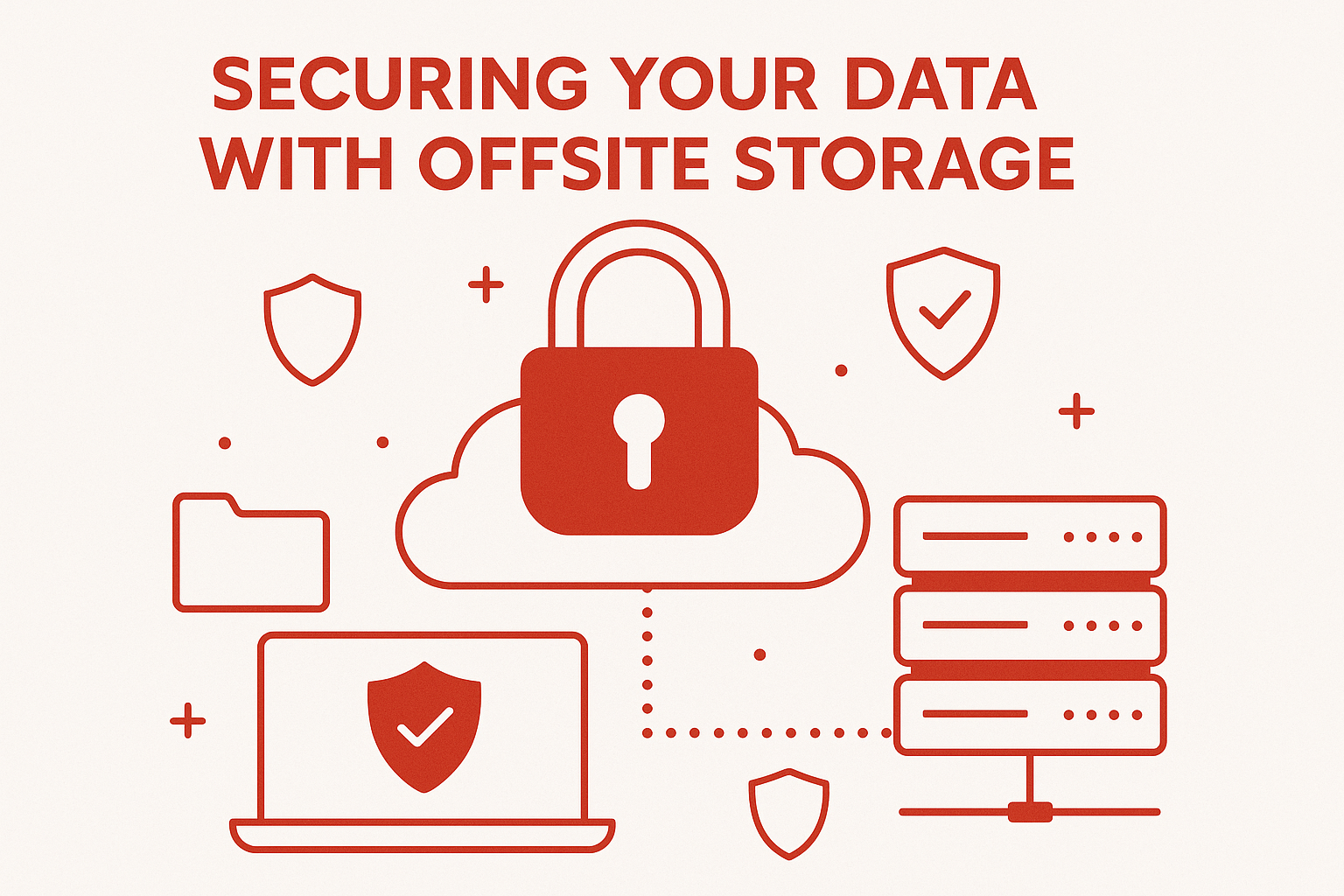
Key Takeaways
- Disaster-proof your data – Offsite storage safeguards information from fire, flood, theft, or power failures.
- Protection from cyberattacks – Keeps backups isolated from ransomware and malware targeting your primary systems.
- Built for compliance – Trusted providers follow strict standards (HIPAA, GDPR, ISO), ensuring legal and regulatory safety.
- Scales with your business – Flexible storage grows with your data needs without costly hardware investments.
- Always accessible, always secure – Encrypted transfers, 24/7 access, and strong authentication keep data both safe and available.
Why Offsite Storage Matters
- Disaster Recovery – Fire, flood, or power outages can wipe out onsite systems instantly. Offsite storage ensures your data is safe, no matter what happens to your physical location.
- Protection Against Cyber Threats – With ransomware and malware attacks on the rise, having data stored offsite in secure facilities means hackers can’t lock you out of everything.
- Compliance and Security Standards – Many offsite providers follow strict protocols like ISO certifications, HIPAA, or GDPR compliance, giving you an added layer of assurance.
Key Benefits of Offsite Data Storage
1. Reliability Beyond Onsite Risks
Unlike local backups, which can fail during the same outage that affects your main systems, offsite storage provides redundancy and geographic diversity.
2. Scalable for Business Growth
From startups to enterprises, offsite storage adapts to your data volume, so you only pay for what you use, with no need for costly server expansions.
3. 24/7 Accessibility
Modern offsite storage solutions integrate with the cloud, allowing authorized users to access files securely from anywhere, anytime.
4. Stronger Security Measures
Professional cybersecurity services can protect offsite data through encryption, access controls, authentication, and ongoing monitoring.
On-Premise vs. Offsite: Why the Shift Matters
- On-Premise: High setup and maintenance costs, prone to local disasters, and often requires in-house expertise.
- Offsite: Flexible, professionally managed, and designed for business continuity.
Best Practices for Securing Data with Offsite Storage

- Choose a Trusted Provider – Look for certifications, uptime guarantees, and proven track records.
- Encrypt Your Data – Always ensure both in-transit and at-rest data are encrypted.
- Regular Backups and Testing – Schedule frequent backups and test recovery processes to ensure reliability.
- Implement Access Controls – Use role-based permissions and multi-factor authentication.
- Combine with Cloud Strategy – For maximum flexibility, integrate offsite storage with cloud-based solutions.
Conclusion
Securing your data isn’t just about avoiding losses, it’s about building trust with customers, protecting business continuity, and staying competitive. Offsite storage delivers the resilience that local servers alone can’t provide. By adopting a proactive strategy today, you ensure that your data and your business, remains safe tomorrow.
Explore how Adivi’s services help you build trust, ensure business continuity, and safeguard your organization’s future through resilient offsite data protection.
FAQ
Is offsite storage safe from cyberattacks?
Yes. Reputable providers use strong encryption, multi-factor authentication, and continuous monitoring to protect against ransomware, malware, and unauthorized access.
Can small businesses benefit from offsite storage?
Absolutely. Offsite storage is scalable, making it affordable for small businesses while still providing enterprise-level security and accessibility.
How often should backups be updated?
Best practice is to schedule automated, regular backups, daily or weekly depending on your operations and test recovery processes to ensure data can be restored quickly.
Is offsite storage accessible at all times?
Yes. Most modern offsite storage solutions integrate with the cloud, giving authorized users secure 24/7 access from anywhere.