Managed Detection and Response, or MDR, is a cybersecurity service that monitors your systems 24/7. It identifies threats, investigates them, and helps prevent damage before it occurs.
Instead of relying solely on software, MDR combines innovative technology with genuine human insight. Automated tools handle detection and data collection. Experienced analysts do the rest—review alerts, track suspicious behavior, and decide what needs to be done next.
This is especially helpful if your organization doesn’t have a full-time security team. MDR gives you access to a skilled team that monitors systems 24 hours a day.
MDR can be the answer if you’re trying to strengthen your defense without having to build everything from scratch. Begin by reviewing your current protections and identifying areas where support may be lacking.
Key Capabilities of Managed Detection And Response (MDR)
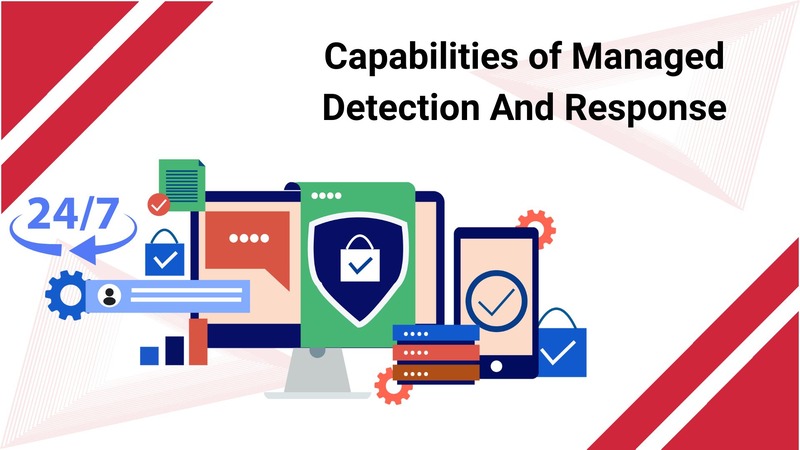
An effective MDR service will offer more than just alerts. These are the core features to look for:
24/7 Threat Monitoring Across Environments
Your systems don’t sleep, and threats don’t, either. MDR constantly monitors your endpoints, cloud, networks, and user activities.
It uses innovative detection tools that learn patterns over time. This helps identify anomalies, such as sudden logins, file changes, or system spikes, that indicate an attack.
Proactive Threat Hunting
Not every threat shows up clearly. Some slip under the radar.
This is where human-led threat hunting comes in. Analysts dig into the data to uncover silent attacks or suspicious trends that machines might miss. They work from hypotheses and test them with live data.
Rapid Incident Validation and Triage
Alerts are worthless if they’re not sorted quickly. MDR teams review alerts, confirm real threats, and rank them by urgency.
Detection alone just signals that something may be wrong. Triage means sorting out information quickly and determining what requires a response first.
Containment and Guided Remediation
Once a threat is real, swift action is crucial. MDR helps isolate infected systems to keep the danger from spreading.
Some providers guide your internal team on the next steps. Others take complete control and fix the issue for you. What you choose depends on your contract and internal capacity.
How Managed Detection And Response (MDR) Differs From Traditional Security Models
Traditional security tools can help you detect issues, but they often stop there.
Take SIEM as an example. It collects and organizes security logs from across your systems. But it doesn’t act on what it finds. MDR takes those logs, investigates the threat, and helps you respond quickly and effectively.
EDR tools watch your endpoints for suspicious activity. They’re good at spotting threats on laptops, desktops, or servers. But EDR alone won’t tell you what to do next. MDR notes that the human layer comprises analysts who review alerts, verify their authenticity, and take necessary action.
MSSPs typically send you alerts when something appears to be off. They notify you, but rarely get involved in the response. MDR closes that loop. It doesn’t just alert—it helps contain the threat and guides you through the recovery process.
In short, MDR fills the space between alert and action. It helps you respond quickly and confidently.
Who Needs Managed Detection And Response (MDR)?
MDR isn’t just for large companies. It fits many use cases:
- Midsize businesses without a dedicated security team
- Enterprises that need support for internal SOCs
- Businesses with regulatory requirements (HIPAA, PCI-DSS, GDPR)
- Remote and hybrid workplaces with increased risk exposure
If your team is stretched thin or your systems are expanding, MDR can give your security team breathing room.
Benefits of Using Managed Detection And Response (MDR)
MDR delivers practical outcomes. Here’s what you can expect:
Accelerated Threat Response
Faster action leads to more minor incidents. Early containment helps avoid major shutdowns or data loss.
Improved Security Maturity Without Building a SOC
Gain access to trained analysts, threat hunters, and digital forensics experts without hiring them full-time.
Cost Efficiency and Scalability
You don’t need to buy new tools or grow your team from scratch. MDR grows with your needs, not against your budget.
Compliance and Reporting Support
With logs, reports, and incident histories provided, compliance becomes easier to achieve. If audits are conducted, you’ll have proof of the controls in place.
How to Evaluate a Managed Detection And Response (MDR) Provider
Not all MDR services operate in the same manner. Here’s what to check:
- Do they have a global team monitoring 24/7?
- Have they worked with businesses like yours before?
- Will they take full action, or just guide you?
- Where do they get their threat intelligence?
- Can they connect with your existing tools and platforms?
- Do they offer clear response times and SLAs?
- Will you get easy-to-read dashboards and reports?
Challenges and Limitations of MDR Solutions
MDR is powerful, but it’s not magic.
You’ll still need your internal IT team involved. MDR helps, but it doesn’t replace internal awareness or training.
You also need to be clear on data handling. Not all regions allow data to leave their borders. Check local regulations before signing any contract.
Finally, automation has limits. Some decisions need human judgment. MDR supports this but doesn’t make every choice for you.
The Future of Managed Detection And Response (MDR)
MDR is evolving fast. Here’s what’s next:
- MDR + XDR: Expect more integration with Extended Detection and Response for better visibility
- AI and Predictive Security: Smarter tools that act on early signals before damage happens
- Industry-Specific MDR: Tailored methods for healthcare, finance, education, and cloud-first companies
- Zero Trust and Cloud-Native Integration: Better control in borderless, remote-first environments
MDR will continue to adjust as threats become more sophisticated. Ensure your provider is evolving as well.
Final Takeaway
Threats move fast. If your response doesn’t match that speed, you’re exposed.
MDR provides you with support, speed, and strategy without requiring you to build a full security department from scratch. It’s a safety net backed by skilled people, smart tools, and fast action.
If you’re looking to strengthen your current protections, audit your setup. Spot the gaps. Consider if MDR fills the space between your goals and your current coverage.
You can learn more and explore next steps here, Adivi.
FAQs
Does MDR replace antivirus software?
No. MDR is a service, not a replacement. It works in conjunction with antivirus tools to provide broader coverage.
Is MDR only for large companies?
No. MDR is often utilized by mid-sized businesses that lack internal security staff.
Can MDR detect insider threats?
Yes. It monitors behavior patterns and can alert you to suspicious activity from within your network.
What happens when MDR finds a threat?
Depending on your agreement, the provider either alerts your team or takes direct action.
Is MDR the same as EDR?
No. EDR focuses on endpoints. MDR includes EDR but also incorporates additional people and processes to effectively handle threats.
How fast does MDR respond to incidents?
Most providers respond within minutes, depending on the severity and your SLA.
Do I need a SOC if I have MDR?
Not necessarily. MDR provides you with access to a SOC without requiring you to build one.
Does MDR help with compliance?
Yes. MDR logs activity, creates reports, and helps show that your defenses meet required standards.
Is MDR useful in cloud environments?
Yes. Many MDR tools are compatible with both hybrid and cloud-native systems.
Can I use MDR with existing tools?
Most MDR providers integrate with your SIEM, firewalls, EDR tools, and cloud platforms.