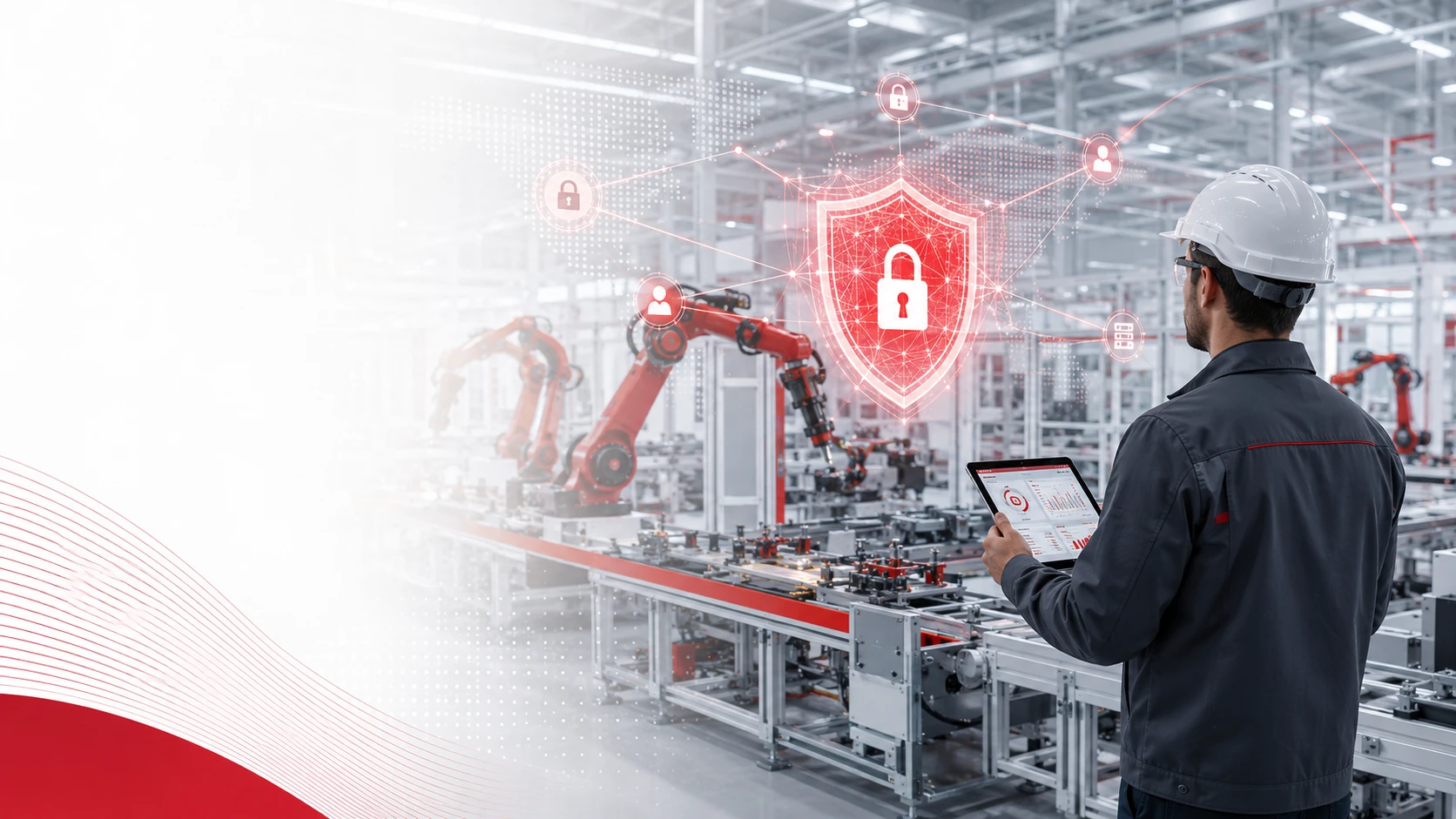
Manufacturers rely on connected systems, production equipment, suppliers, and digital tools to keep operations running. But as manufacturing becomes more connected, cyber risks increase.
Cybersecurity for manufacturing helps protect uptime, data, production systems, and business continuity from threats like ransomware, phishing, and supply chain attacks.
Key Takeaways
- Manufacturing companies are attractive targets because downtime can be expensive and disruptive.
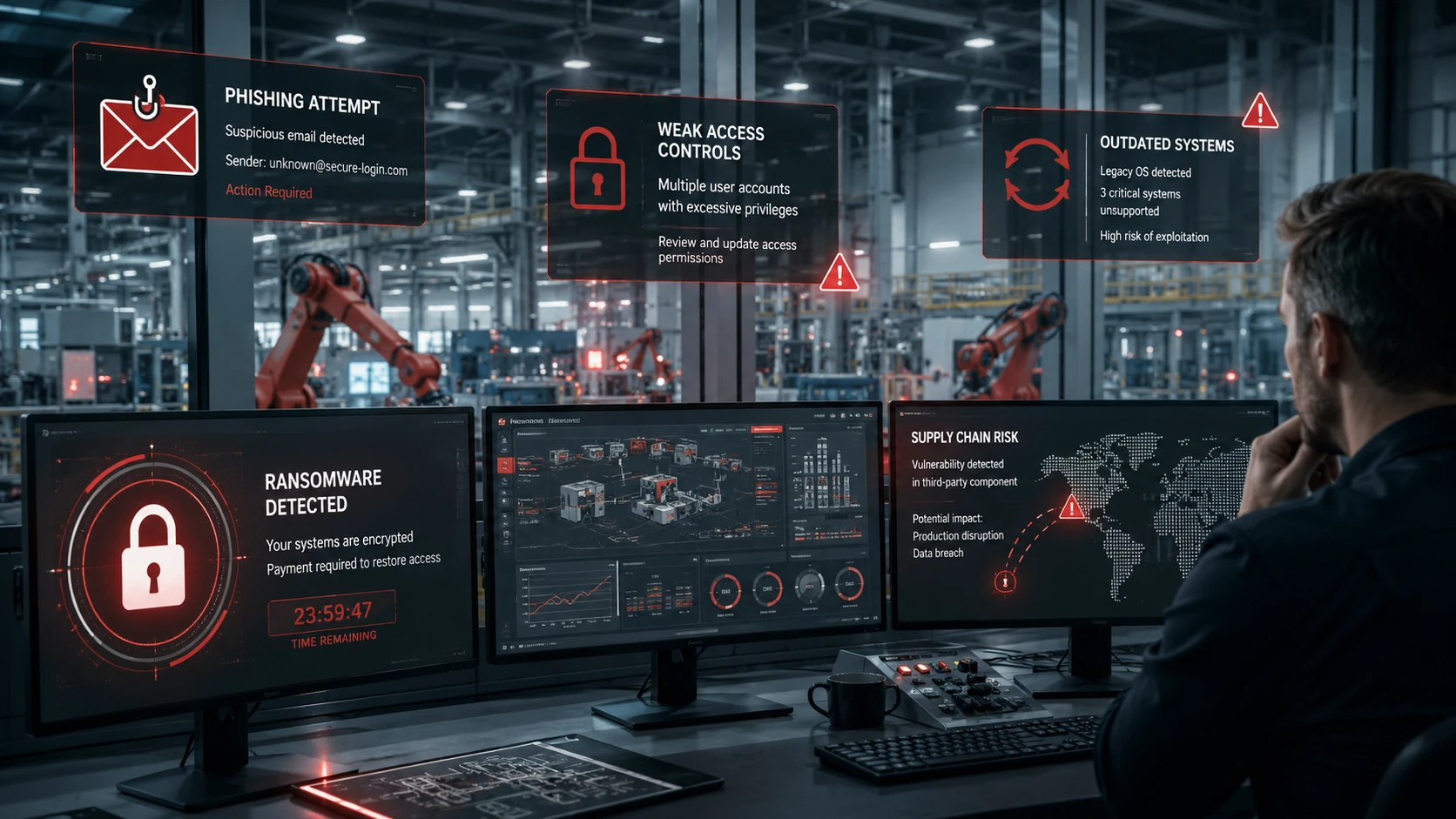
- Common risks include ransomware, phishing, outdated systems, weak access controls, and supply chain vulnerabilities.
- Cybersecurity should cover both IT systems and operational technology, including machinery, sensors, and industrial control systems.
- Strong backups, employee training, network segmentation, access control, and 24/7 monitoring can help reduce risk.
- Manufacturers without an internal cybersecurity team should consider professional support to improve protection and response.
Why Cybersecurity Matters in Manufacturing
Manufacturers depend on connected systems to manage production, inventory, vendors, orders, and daily operations. When those systems are disrupted, the impact can quickly lead to downtime, delayed deliveries, lost revenue, and customer frustration.
Manufacturing environments also often include legacy equipment, operational technology, and third-party access points that can create security gaps. Strong cybersecurity helps protect both business systems and production operations from costly disruption.
Common Cybersecurity Risks in Manufacturing
Ransomware Attacks
Ransomware is one of the most serious cybersecurity threats for manufacturers. It can encrypt files, block access to systems, and make essential data or applications unusable. CISA defines ransomware as malware that encrypts files on a device, making the files and the systems that rely on them unavailable.
For a manufacturing company, ransomware may affect production schedules, inventory systems, accounting platforms, shipping records, and communication tools. In more severe cases, it can halt operations until systems are restored.
A reliable backup and recovery strategy is critical. Without tested backups, manufacturers may face longer downtime and more difficult recovery decisions.
Phishing and Business Email Compromise
Phishing remains a common way attackers gain access to company systems. Employees may receive emails that look legitimate but are designed to steal passwords, install malware, or trick someone into approving a fraudulent payment.
Business email compromise can be especially damaging for manufacturers because finance teams, purchasing departments, vendors, and suppliers often communicate through email. A single compromised inbox can create opportunities for invoice fraud, credential theft, or unauthorized access.
Employee training, email filtering, multi-factor authentication, and clear payment approval procedures can reduce this risk.
Outdated Systems and Legacy Equipment
Many manufacturing businesses use older software, machines, and control systems that were not designed with modern cybersecurity threats in mind. Some may no longer receive security updates. Others may be difficult to patch because downtime would interrupt production.
These older systems can become weak points in the network. Attackers often look for outdated software, exposed remote access tools, or unpatched vulnerabilities to gain entry.
Manufacturers should maintain an inventory of systems and devices, review which tools are still supported, and create a plan to update or isolate high-risk systems.
Weak Network Security
A flat or poorly secured network can allow an attacker to move from one system to another more easily. For example, if office computers, production systems, guest Wi-Fi, and vendor access are all connected without proper separation, one compromised device may create broader exposure.
Manufacturers should separate business networks from production networks where possible. Firewalls, secure Wi-Fi, network monitoring, and segmentation can help limit the spread of threats.
Supply Chain Vulnerabilities
Manufacturers often work with vendors, contractors, logistics providers, software platforms, and equipment partners. These relationships are essential, but they can also introduce cybersecurity risk.
If a vendor account is compromised, an attacker may attempt to use that trusted relationship to access systems, send fraudulent emails, or disrupt operations. The 2026 Verizon Data Breach Investigations Report highlights software vulnerabilities and third-party exposure as major areas of concern for businesses.
Manufacturers should regularly review vendor access, require strong authentication, and avoid giving third parties more access than they need.
Insider Threats
Not every cybersecurity risk comes from an outside attacker. Insider threats can come from employees, former employees, contractors, or users with unnecessary access.
In many cases, insider risk is not intentional. It may happen because someone clicks a harmful link, reuses a weak password, stores files in the wrong place, or keeps access after changing roles.
Role-based access, regular permission reviews, employee training, and clear offboarding procedures can help reduce insider risk.
Operational Technology Security Risks
Operational technology, or OT, includes systems that monitor and control physical processes. In manufacturing, this may include machinery, sensors, programmable logic controllers, industrial control systems, and other production equipment.
OT security is important because a cyber incident can affect physical operations, not just digital files. NIST’s Manufacturing Profile provides a risk-based approach to help manufacturers manage cybersecurity across manufacturing systems and align cybersecurity activity with industry best practices.
Manufacturers should not treat OT security as separate from business risk. Production systems need visibility, protection, monitoring, and clear response plans.
How Cyberattacks Affect Manufacturing Businesses
A cyberattack can quickly disrupt a manufacturing business, leading to downtime, delayed orders, lost revenue, and recovery costs.
If key systems go offline, employees may be unable to access production schedules, process orders, manage inventory, or coordinate shipments. Attacks can also expose sensitive data such as customer records, supplier information, contracts, pricing, product designs, and intellectual property.
Other impacts may include:
- Delayed production
- Missed delivery deadlines
- Increased recovery costs
- Lost revenue
- Reputational damage
- Compliance concerns
- Disrupted vendor relationships
- Loss of customer trust
The longer a company takes to detect and respond to an attack, the greater the potential damage. That is why prevention, monitoring, and incident response planning are all important parts of manufacturing cybersecurity.
Cybersecurity Solutions for Manufacturing Companies
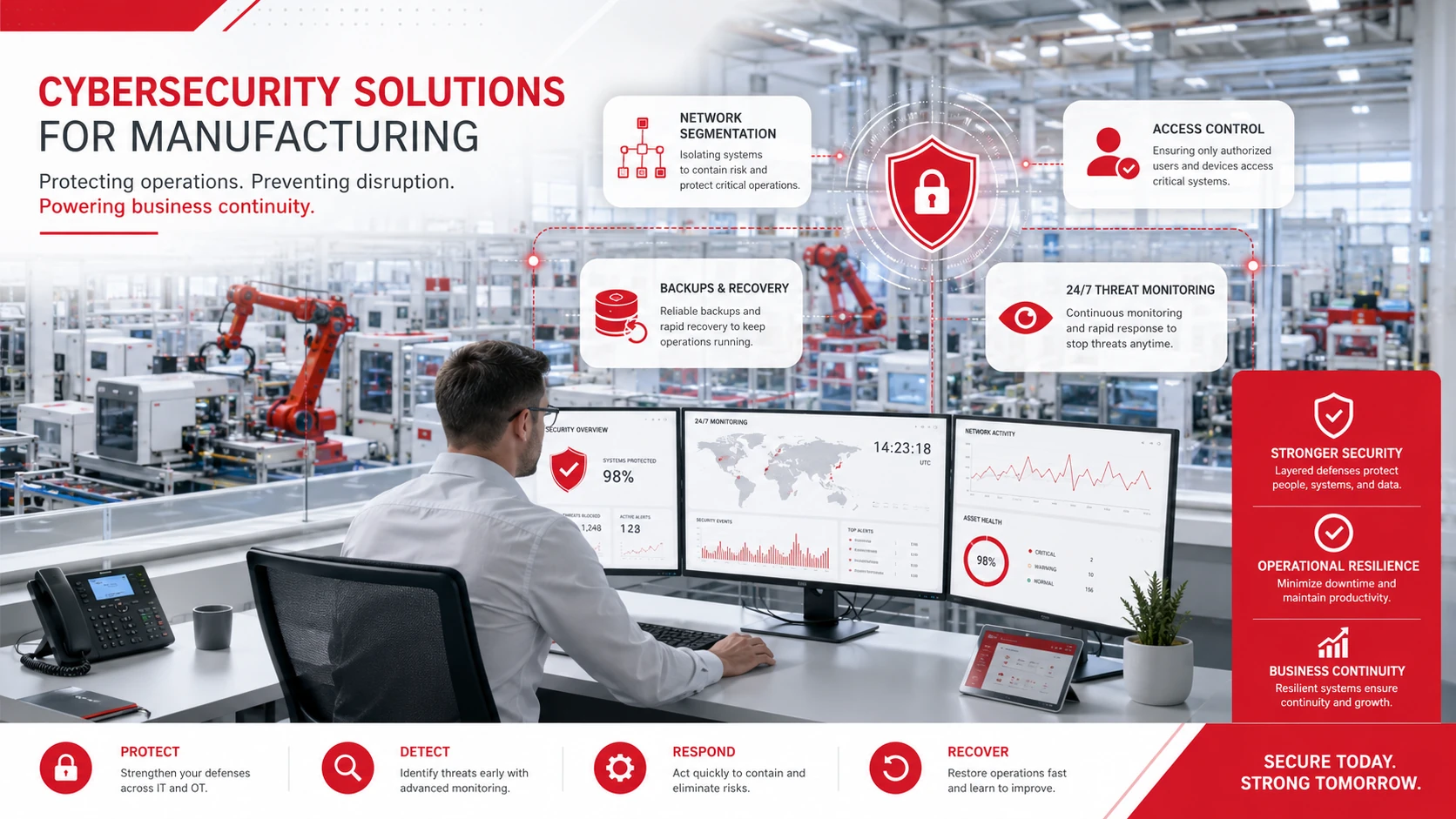
Strengthen Network Security
Manufacturers should start by improving network visibility and control. This includes securing Wi-Fi, using firewalls, monitoring network activity, and separating office systems from production environments.
Network segmentation is especially important. If one system is compromised, segmentation can help prevent the threat from spreading across the entire organization.
Use Endpoint Protection
Every connected device can become an entry point. This includes desktops, laptops, servers, mobile devices, and connected equipment.
Endpoint protection helps detect and block malware, suspicious behavior, and unauthorized activity. For manufacturers with multiple locations, remote employees, or shared workstations, endpoint security is an important layer of protection.
Train Employees on Cybersecurity
Employees are often the first line of defense. Training should help staff recognize phishing emails, suspicious attachments, fake login pages, unusual payment requests, and social engineering attempts.
Training should be simple, practical, and repeated regularly. Employees should know what to look for and who to contact when something seems suspicious.
Keep Systems Updated
Software updates and security patches help close known vulnerabilities. Manufacturers should update operating systems, business software, firmware, and security tools whenever possible.
For legacy systems that cannot be updated easily, companies should consider extra protections such as network isolation, restricted access, and closer monitoring.
Back Up Critical Data
Backups are essential for ransomware recovery and business continuity. Manufacturers should back up important files, applications, configuration data, and operational records.
However, backups are only useful if they work. They should be tested regularly to confirm that data can be restored when needed. Backup copies should also be protected from ransomware, accidental deletion, and unauthorized access.
Control User Access
Not every employee needs access to every system. Manufacturers should use role-based access so users only have the permissions required for their job.
Multi-factor authentication should be used for email, remote access, cloud platforms, administrative accounts, and other sensitive systems. Former employees and inactive users should be removed promptly.
Monitor Systems 24/7
Cyberattacks do not always happen during business hours. Continuous monitoring can help detect unusual activity before it becomes a larger incident.
Security monitoring may identify suspicious logins, unusual file activity, malware behavior, or unauthorized access attempts. For manufacturers with limited internal IT resources, managed security monitoring can provide important support.
Create an Incident Response Plan
An incident response plan outlines what to do when a cyberattack or security incident occurs. It should identify key contacts, response steps, communication procedures, backup recovery processes, and escalation paths.
A strong plan helps reduce confusion during a stressful situation. It also helps manufacturers respond faster, limit damage, and restore operations more efficiently.
Best Practices for Manufacturing Cybersecurity
Manufacturers can reduce risk by applying a layered cybersecurity approach. No single tool can stop every threat, but the right combination of policies, technology, monitoring, and training can make the business much harder to attack.
Important best practices include:
- Separate office networks from production networks.
- Require multi-factor authentication for critical systems.
- Review vendor and contractor access regularly.
- Train employees to recognize phishing and suspicious requests.
- Test backups on a regular schedule.
- Monitor endpoints, servers, and network activity.
- Keep software and firmware updated.
- Replace or isolate unsupported systems.
- Document cybersecurity policies and procedures.
- Limit administrative access.
- Review cyber insurance requirements.
- Create and test an incident response plan.
- Work with a cybersecurity provider when internal resources are limited.
Cybersecurity should not be treated as a one-time project. Manufacturing environments change over time as new machines, vendors, software, employees, and locations are added. Security should be reviewed regularly to keep pace with those changes.
When Should Manufacturers Get Professional Cybersecurity Support?
Some manufacturers have internal IT teams, but not every IT team has the time, tools, or cybersecurity expertise needed to monitor threats around the clock.
A manufacturing company may need professional cybersecurity support if:
- There is no dedicated cybersecurity team.
- Systems are outdated or difficult to patch.
- The company has experienced suspicious activity or downtime.
- Backups are not tested regularly.
- Employees rely heavily on email, cloud platforms, or remote access.
- Vendors or contractors need access to internal systems.
- There is no formal incident response plan.
- The business must meet compliance or cyber insurance requirements.
- The company is growing across multiple users, devices, or locations.
A cybersecurity provider can help assess current risk, close security gaps, monitor systems, improve backup and recovery planning, and guide the company through stronger long-term protection.
Cybersecurity for Manufacturing
Cybersecurity for manufacturing is about protecting the systems that keep the business running. It affects production, shipping, communication, customer service, financial operations, and long-term growth.
Manufacturers face unique risks because they depend on both IT and operational technology. Ransomware, phishing, outdated systems, weak access controls, and supply chain vulnerabilities can all create serious disruption if they are not addressed.
The best approach is proactive. Manufacturers should secure their networks, train employees, protect endpoints, manage access, test backups, monitor systems, and prepare an incident response plan before an attack happens.
With the right cybersecurity strategy, manufacturing companies can reduce risk, improve resilience, and keep operations moving with greater confidence.
FAQs
Why is cybersecurity important in manufacturing?
Cybersecurity is important in manufacturing because cyberattacks can disrupt production, delay orders, expose sensitive data, and create costly downtime. Strong cybersecurity helps protect operations, revenue, and customer trust.
What is the biggest cybersecurity risk for manufacturers?
Ransomware is one of the biggest cybersecurity risks for manufacturers because it can lock important files and systems, making it difficult to continue normal operations.
How can manufacturers prevent cyberattacks?
Manufacturers can reduce cyber risk by using multi-factor authentication, employee training, endpoint protection, secure backups, network segmentation, regular updates, access control, and continuous monitoring.
What is OT security in manufacturing?
OT security protects operational technology used in manufacturing environments. This can include machinery, sensors, industrial control systems, and equipment that supports production.
Do small manufacturers need cybersecurity?
Yes. Small manufacturers need cybersecurity because they still rely on digital systems, email, vendors, production tools, and customer data. Smaller companies may also have fewer internal security resources, which can make them attractive targets.
What should manufacturers include in a cybersecurity plan?
A manufacturing cybersecurity plan should include network security, employee training, access control, endpoint protection, data backups, vendor access reviews, system monitoring, and an incident response plan.