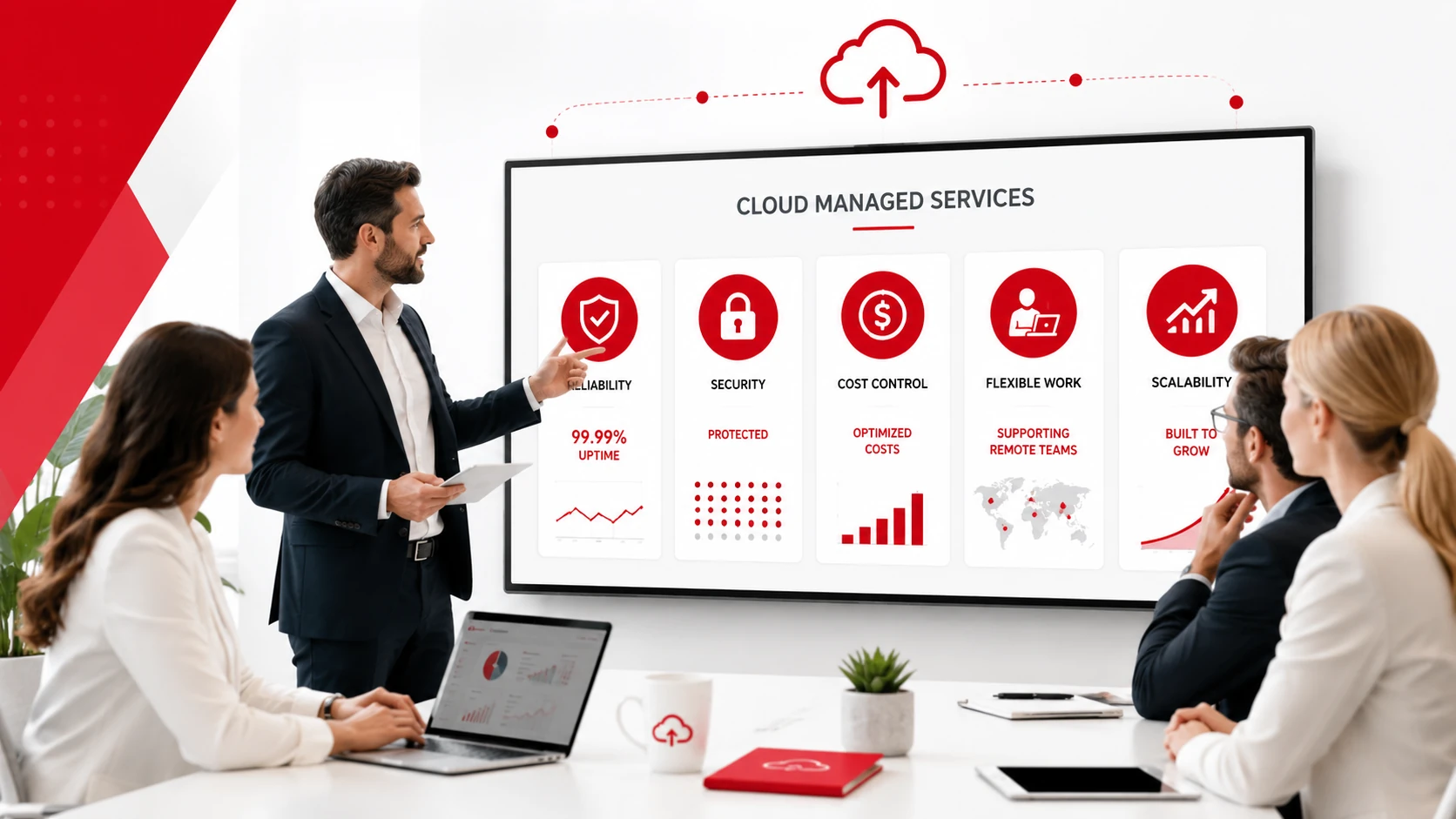
Cloud managed services are outsourced services that help businesses monitor, manage, secure, and support their cloud systems. Instead of handling cloud infrastructure, applications, security, backups, and user access alone, businesses work with a provider that manages these responsibilities on an ongoing basis.
For many small and mid-sized businesses, cloud managed services make cloud technology easier to use, safer to manage, and more reliable for daily operations.
Key Takeaways
- Cloud managed services provide ongoing support and management for cloud environments.
- They can include monitoring, security, backup, access management, optimization, and user support.
- Businesses use cloud managed services to reduce downtime, improve security, control costs, and support growth.
- Cloud migration moves systems to the cloud, while cloud managed services support the environment after migration.
- Cloud managed services are useful for businesses that rely on cloud applications, remote work, hosted systems, or sensitive data.
What Are Cloud Managed Services?
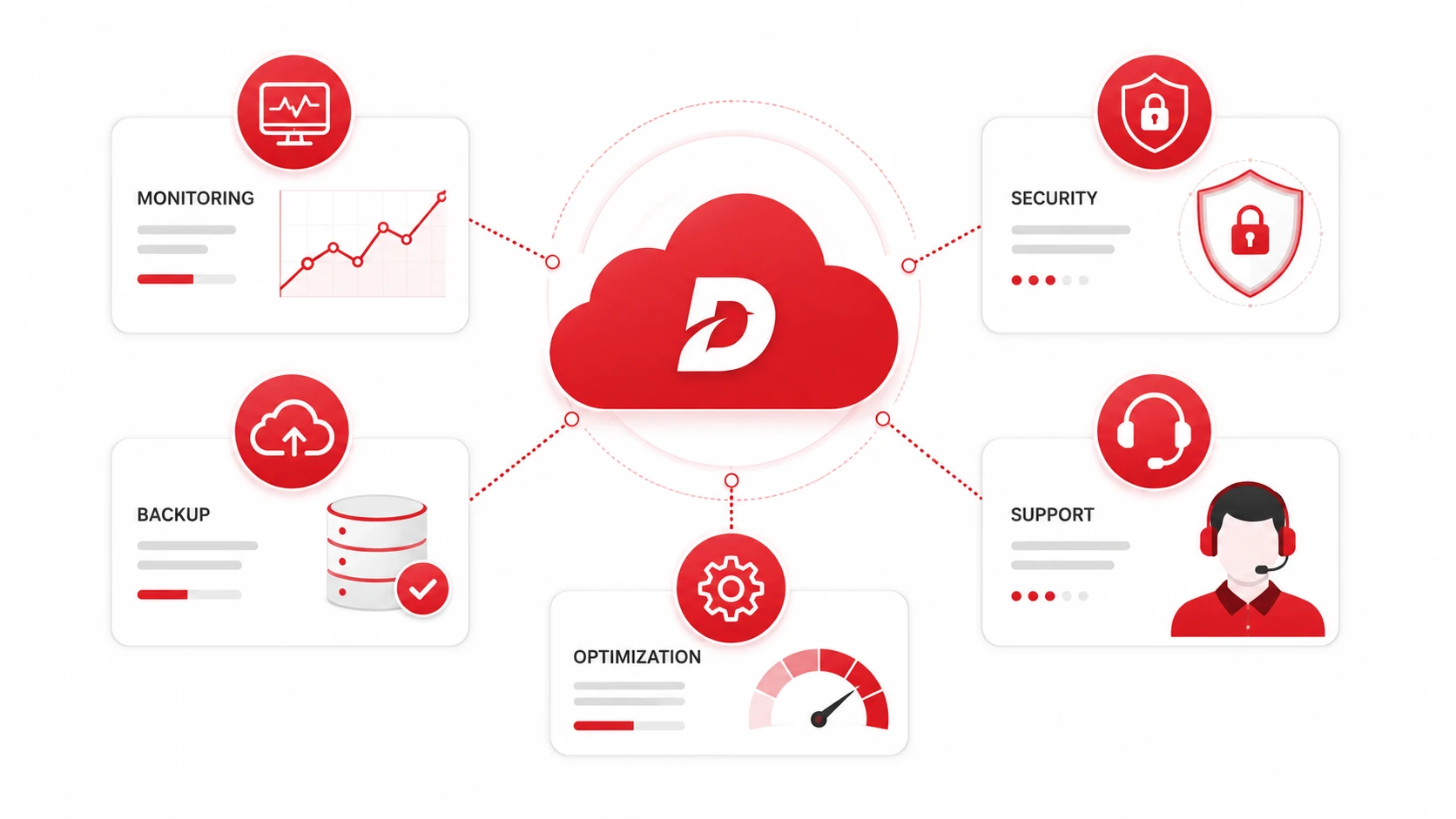
Cloud managed services provide ongoing support and management for cloud environments. They may include cloud monitoring, maintenance, cybersecurity, backups, cost management, performance optimization, and user support.
Businesses use cloud managed services to reduce downtime, improve security, control costs, and avoid managing cloud systems without the right internal expertise.
| Cloud Managed Service | What It Means |
| Monitoring | Watching cloud systems for issues or downtime |
| Security | Protecting cloud data, users, and access |
| Support | Helping employees and systems run smoothly |
| Optimization | Improving performance and managing cloud costs |
| Backup | Protecting cloud data from loss or deletion |
Cloud managed services are especially useful for businesses using Microsoft 365, cloud storage, hosted applications, cloud servers, or hybrid cloud environments.
How Cloud Managed Services Work
Cloud managed services usually begin with a review of your current cloud environment. The provider looks at your systems, users, security settings, data, applications, and support needs.
A typical process may look like this:
- The provider reviews the current cloud environment.
- They identify risks, performance issues, and support gaps.
- Cloud monitoring and management tools are set up.
- Security controls and user permissions are reviewed.
- Backups and recovery processes are configured.
- The provider supports users, systems, and ongoing improvements.
The goal is to keep the cloud environment secure, organized, and reliable after it is in place. Cloud systems still need active management, even when they are hosted outside the office.
What Do Cloud Managed Services Include?
Cloud services can vary depending on the provider and the business’s needs. However, most cloud managed services include a mix of monitoring, security, support, backup, and optimization.
Common cloud managed services include:
- Cloud monitoring
- Cloud infrastructure management
- Cloud security support
- Microsoft 365 or cloud application support
- User access management
- Cloud backup management
- Disaster recovery planning
- Performance optimization
- Cost management
- Patch management
- Cloud migration support
- Compliance support
- Help desk support
For example, a provider may help manage user permissions in Microsoft 365, monitor cloud servers for downtime, review backup settings, support employees with access issues, and recommend ways to reduce unnecessary cloud costs.
Why Businesses Use Cloud Managed Services
Moving to the cloud does not mean IT management disappears. In many cases, cloud systems need just as much planning and oversight as on-premise systems.
Businesses use cloud managed services because:
- Cloud systems need ongoing monitoring
- Internal teams may not have deep cloud expertise
- Misconfigured cloud access can create security risks
- Cloud costs can grow without proper oversight
- Employees need reliable access to cloud tools
- Cloud environments change as teams and data grow
- Businesses need support after migration is complete
Cloud managed services help companies get more value from the cloud without leaving performance, access, security, or backups unmanaged.
Cloud Managed Services vs Traditional IT Support
Traditional IT support often focuses on local devices, office networks, printers, workstations, and on-premise servers. Cloud managed services focus on cloud platforms, hosted systems, cloud applications, user access, cloud security, and cloud performance.
| Category | Traditional IT Support | Cloud Managed Services |
| Main focus | Local devices and networks | Cloud platforms and applications |
| Infrastructure | Often on-premise | Cloud-hosted or hybrid |
| Access | Office-based or VPN | Remote, cloud-based access |
| Security | Device and network security | Cloud identity, permissions, and data security |
| Support needs | Hardware, software, network issues | Cloud access, storage, performance, and security |
Many businesses need both. Managed IT services can support the broader technology environment, while cloud managed services focus specifically on cloud platforms and cloud-based workflows.
Cloud Managed Services vs Cloud Migration Services
Cloud migration services and cloud managed services are related, but they are not the same.
Cloud migration services help move systems, applications, or data to the cloud. Cloud managed services provide ongoing support after the move.
| Service | Main Purpose |
| Cloud Migration Services | Move systems and data to the cloud |
| Cloud Managed Services | Manage, secure, support, and optimize cloud systems after migration |
A business may need cloud migration services when replacing an old server or moving files into a cloud platform. After migration, cloud managed services help keep the environment stable, secure, and properly maintained.
Benefits of Cloud Managed Services
Cloud managed services can help businesses use cloud technology with less risk and less internal burden.
Key benefits include:
- More reliable cloud performance
- Faster technical support
- Stronger cloud security
- Better user access control
- Reduced downtime
- Improved backup and recovery
- More predictable cloud management
- Lower burden on internal teams
- Better cloud cost visibility
- Scalable support as the business grows
One of the biggest benefits is having a provider watch over the cloud environment continuously. This helps businesses catch issues earlier, keep users supported, and reduce the chance of small problems turning into major disruptions.
Common Cloud Management Challenges
Cloud tools are powerful, but they can become difficult to manage without the right oversight.
Common cloud management challenges include:
- Uncontrolled cloud costs
- Weak user permissions
- Poor backup planning
- Slow application performance
- Lack of monitoring
- Security misconfigurations
- Former employees retaining access
- Confusing cloud licensing
- Limited internal cloud expertise
These issues can create security risks, wasted spending, and employee frustration. A cloud managed services provider helps review these areas and keep them under control.
Who Needs Cloud Managed Services?

Cloud managed services may be right for businesses that rely on cloud tools but do not want to manage everything internally.
Your business may benefit from cloud managed services if you:
- Use cloud applications every day
- Depend on Microsoft 365, cloud storage, or hosted systems
- Have remote or hybrid employees
- Need stronger cybersecurity
- Do not have an internal IT team
- Recently migrated to the cloud
- Need cloud backup and disaster recovery
- Want better control over cloud costs
- Need help managing users, access, and permissions
Cloud managed services are especially useful when cloud systems are central to daily work. If employees depend on cloud access to communicate, share files, serve customers, or manage operations, those systems need reliable support.
How to Choose a Cloud Managed Services Provider
Choosing the right provider is important because cloud systems affect security, productivity, and business continuity.
Look for a provider with:
- Cloud platform experience
- Security expertise
- Backup and disaster recovery support
- Clear service scope
- Fast support response
- Cost management guidance
- User access management
- Migration experience
- Strategic IT planning
- Experience supporting small and mid-sized businesses
A good provider should not only fix cloud issues. They should help your business improve performance, manage costs, reduce risk, and plan for future growth.
Are Cloud Managed Services Worth It?
Cloud managed services are worth it for businesses that depend on cloud systems but do not want to manage performance, security, access, backups, and support alone.
They can help reduce downtime, improve cloud security, control costs, and give employees more reliable access to the tools they need. They can also help small and mid-sized businesses access cloud expertise without hiring a full internal cloud team.
If your cloud tools are important to daily operations, ongoing cloud management can provide stronger long-term value than waiting for issues to appear.
Need Help Managing Your Cloud Environment?
Adivi helps businesses manage cloud systems, improve cloud security, support users, and keep cloud environments running smoothly. Whether your business is moving to the cloud or already using cloud platforms, Adivi can help you build a more reliable and secure cloud strategy.
Schedule a free assessment with Adivi to find the right cloud support plan for your business.
FAQs
What are cloud managed services?
Cloud managed services are outsourced services that help businesses monitor, manage, secure, support, and optimize their cloud systems.
What is included in cloud managed services?
Cloud managed services can include cloud monitoring, security, user access management, backup, disaster recovery, performance optimization, cost management, and help desk support.
Why do businesses use cloud managed services?
Businesses use cloud managed services to improve cloud reliability, strengthen security, reduce downtime, control costs, and avoid managing cloud systems alone.
What is the difference between cloud managed services and cloud migration?
Cloud migration moves systems, applications, or data to the cloud. Cloud managed services provide ongoing support, monitoring, security, and optimization after the cloud environment is in place.
Are cloud managed services worth it for small businesses?
Yes. Cloud managed services can be worth it for small businesses that rely on cloud tools, support remote workers, handle sensitive data, or need stronger cloud security and support.
Who needs cloud managed services?
Cloud managed services are useful for businesses that use cloud applications, hosted systems, Microsoft 365, cloud storage, remote access tools, or hybrid cloud environments.