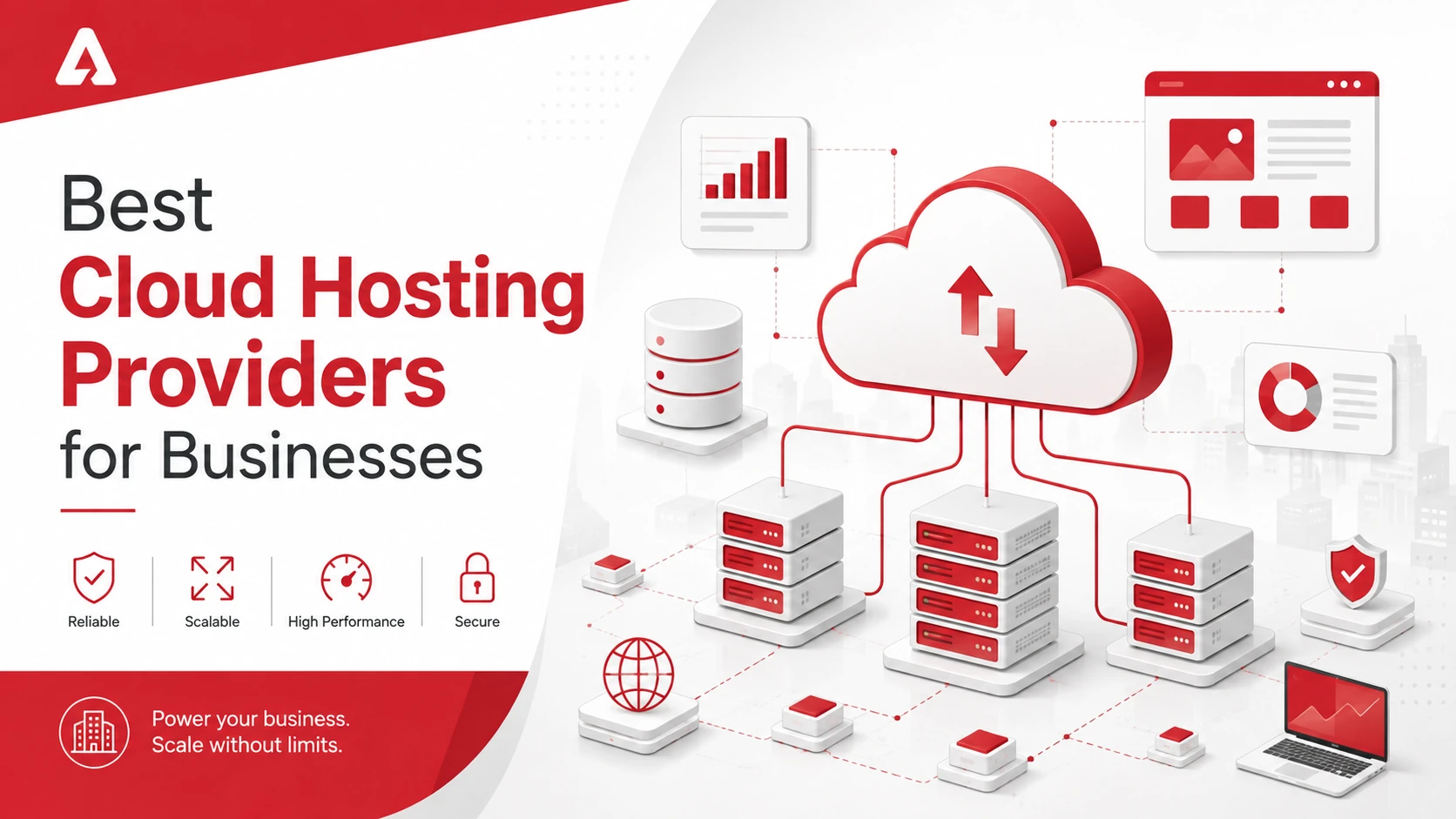
Cloud hosting uses virtual resources from multiple servers to host websites, applications, databases, and other online services. It can provide greater flexibility, scalability, and reliability than hosting that depends on one physical server.
Some providers offer fully managed website hosting, while others provide configurable cloud infrastructure that requires technical experience.
The right provider depends on your workload, technical resources, security requirements, and budget. Features, pricing, and service terms can change, so review the provider’s official website before selecting a plan.
Best Cloud Hosting Providers at a Glance
| Provider | Best for | Management level |
| Hostinger | Small business and ecommerce websites | Fully managed |
| Cloudways | WordPress, ecommerce, and PHP applications | Managed platform |
| SiteGround | Growing and high-traffic websites | Fully managed |
| DigitalOcean | Developers and growing applications | Self-managed or platform-managed |
| Kamatera | Custom cloud server configurations | Self-managed with managed options |
| Amazon Web Services | Complex and scalable environments | Varies by service |
| Microsoft Azure | Microsoft-based business environments | Varies by service |
| Google Cloud | Scalable and data-driven applications | Varies by service |
These providers were compared using official product information on management level, scalability, application support, and intended use cases. Adivi did not independently test provider speed, uptime, or customer support.
Managed Cloud Hosting Providers
1. Hostinger
Hostinger offers fully managed cloud hosting for businesses that need more resources than standard web hosting without managing the underlying server.
Its plans include website management tools, migration support, backups, and scalable resources.
Main consideration: Hostinger is easy to manage but provides less server-level control than a configurable virtual server.
2. Cloudways
Cloudways provides managed hosting using infrastructure from cloud providers such as DigitalOcean, Amazon Web Services, and Google Cloud.
It supports WordPress, WooCommerce, Magento, Laravel, and custom PHP applications while handling many server-management tasks.
Main consideration: Advanced application and performance settings may still require technical knowledge.
3. SiteGround
SiteGround provides fully managed cloud hosting with dedicated resources and website management tools.
It may suit established websites that have outgrown entry-level hosting and need additional processing power, memory, or storage.
Main consideration: Its cloud plans may provide more capacity than a smaller website requires.
Cloud Infrastructure Platforms
4. DigitalOcean
DigitalOcean offers configurable virtual machines through Droplets and a more managed deployment service through App Platform.
Droplets provide greater control, but customers are responsible for managing the server environment.
Main consideration: Some DigitalOcean services require server-management experience.
5. Kamatera
Kamatera allows businesses to configure cloud servers by selecting processing power, memory, storage, operating systems, and other resources.
Managed services can be added for monitoring, technical support, and ongoing infrastructure maintenance.
Main consideration: Businesses need to understand their requirements to configure the service and estimate costs accurately.
6. Amazon Web Services
Amazon Web Services provides hosting options for websites and applications, including virtual servers, storage, serverless services, and managed application platforms.
Its broad service range makes it suitable for complex and highly scalable workloads.
Main consideration: Architecture, security, and cost management can become difficult without experienced technical support.
7. Microsoft Azure
Microsoft Azure provides infrastructure and managed services for websites, applications, APIs, databases, and other business workloads.
Azure App Service offers a fully managed environment for building, deploying, and scaling web applications and APIs.
Main consideration: Azure’s wide range of services requires careful architecture, security, and cost planning.
8. Google Cloud
Google Cloud offers virtual machines, managed application hosting, containers, databases, storage, and other cloud services.
It may suit scalable, containerized, and data-driven applications.
Main consideration: Its service range may be unnecessarily advanced for a basic business website.
Managed vs. Self-Managed Cloud Hosting
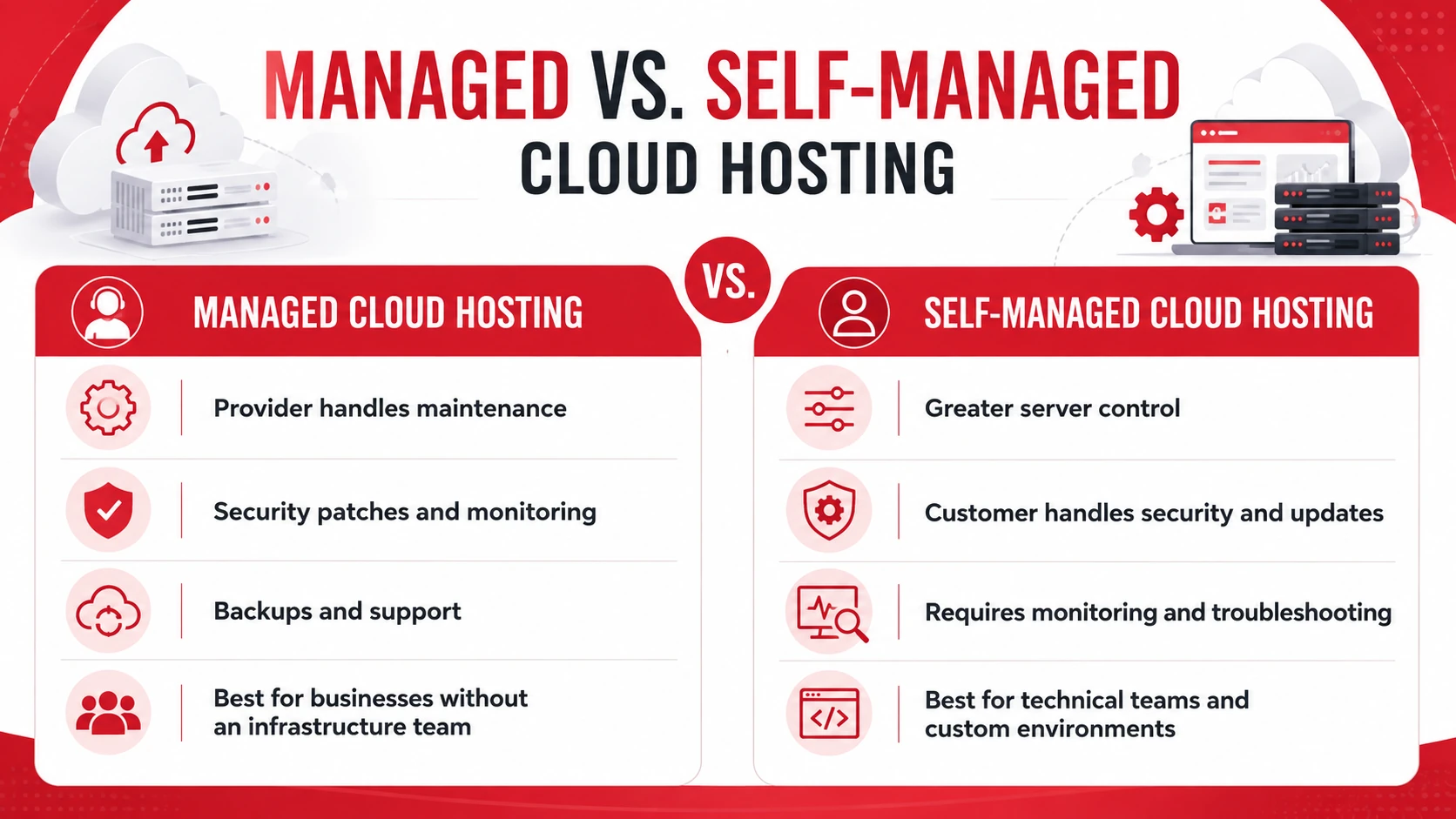
Managed cloud hosting is generally more suitable for businesses without an internal infrastructure team. Depending on the service, the provider may handle server maintenance, security patches, monitoring, backups, and technical support.
Self-managed hosting provides greater control, but the customer is usually responsible for securing, updating, monitoring, and troubleshooting the environment.
Businesses should confirm exactly which responsibilities belong to the provider before selecting a plan.
How to Choose a Cloud Hosting Provider
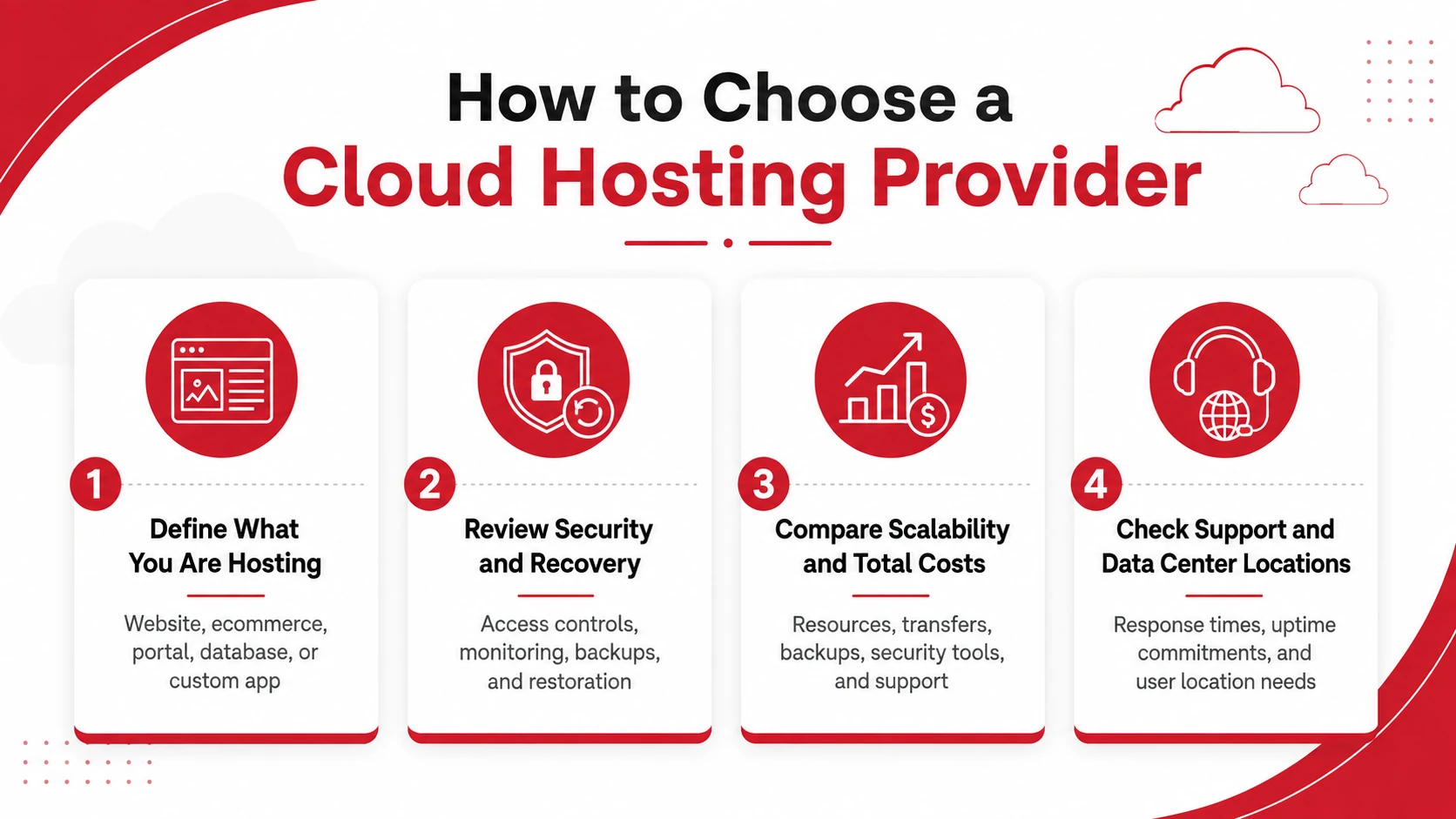
Define What You Are Hosting
A company website has different requirements from an ecommerce store, customer portal, database, or custom application.
Consider expected traffic, storage, application compatibility, and how important the workload is to daily operations.
Review Security and Recovery
Check whether the provider offers appropriate account security, access controls, monitoring, security updates, backups, and data restoration.
Cloud hosting should also be supported by suitable cybersecurity and disaster recovery processes.
Compare Scalability and Total Costs
Review how easily resources can be increased or reduced as demand changes.
Consider the total cost of processing power, storage, data transfers, backups, monitoring, security tools, and technical support rather than relying only on the advertised starting price.
Check Support and Data Center Locations
Review support channels, response times, uptime commitments, and the scope of technical assistance.
You should also confirm that the provider offers suitable data center locations for your users, performance requirements, and data protection obligations.
Conclusion
The best cloud hosting provider is the one that matches your workload and technical capabilities.
Managed providers may be more practical for straightforward business websites, while infrastructure platforms provide greater control for custom and complex applications.
Compare management responsibilities, security, scalability, support, and total costs before making a decision.
Get Help Choosing a Cloud Hosting Provider
Choosing a provider is only one part of building a reliable cloud environment.
Adivi’s cloud computing services can help businesses evaluate hosting options, plan migrations, improve cloud security, and manage cloud resources.
Contact Adivi to discuss your cloud hosting and infrastructure requirements.
Frequently Asked Questions
What Is a Cloud Hosting Provider?
A cloud hosting provider supplies virtual infrastructure or managed services for hosting websites, applications, databases, and other online workloads.
Which Cloud Hosting Provider Is Best for a Small Business?
Hostinger, Cloudways, or SiteGround may suit a small business that wants managed hosting. The right choice depends on the website, traffic, applications, technical resources, and budget.
Is Managed Cloud Hosting Better Than Self-Managed Hosting?
Managed hosting is generally more suitable for businesses that want the provider to handle technical maintenance. Self-managed hosting offers greater control but requires the business to secure and maintain the environment.
Can a Business Change Cloud Hosting Providers?
Yes. However, migration difficulty depends on the application, database, integrations, data volume, and provider-specific services being used.