Digital-first economy, businesses need agility. The ability to move workloads seamlessly across cloud environments, data centers, and hybrid systems is no longer a luxury, it’s a strategic advantage. Yet, many organizations struggle to achieve true workload mobility because of technical, operational, and cultural barriers. Understanding these obstacles and knowing how to overcome them, with the right IT services, is critical for ensuring business continuity and long-term scalability.
Key Takeaways
- Workload mobility is critical for business continuity, scalability, and agility in today’s multi-cloud and hybrid environments.
- Legacy systems and data gravity are major technical barriers, while compliance and costs create operational challenges.
- Security is non-negotiable—encryption, compliance frameworks, and access controls are essential.
- Skill gaps and resistance to change can be solved through training, managed services, and a cloud-smart culture.
- Planning and modernization with containers, hybrid strategies, and cost optimization ensures successful migrations
Common Barriers to Workload Mobility
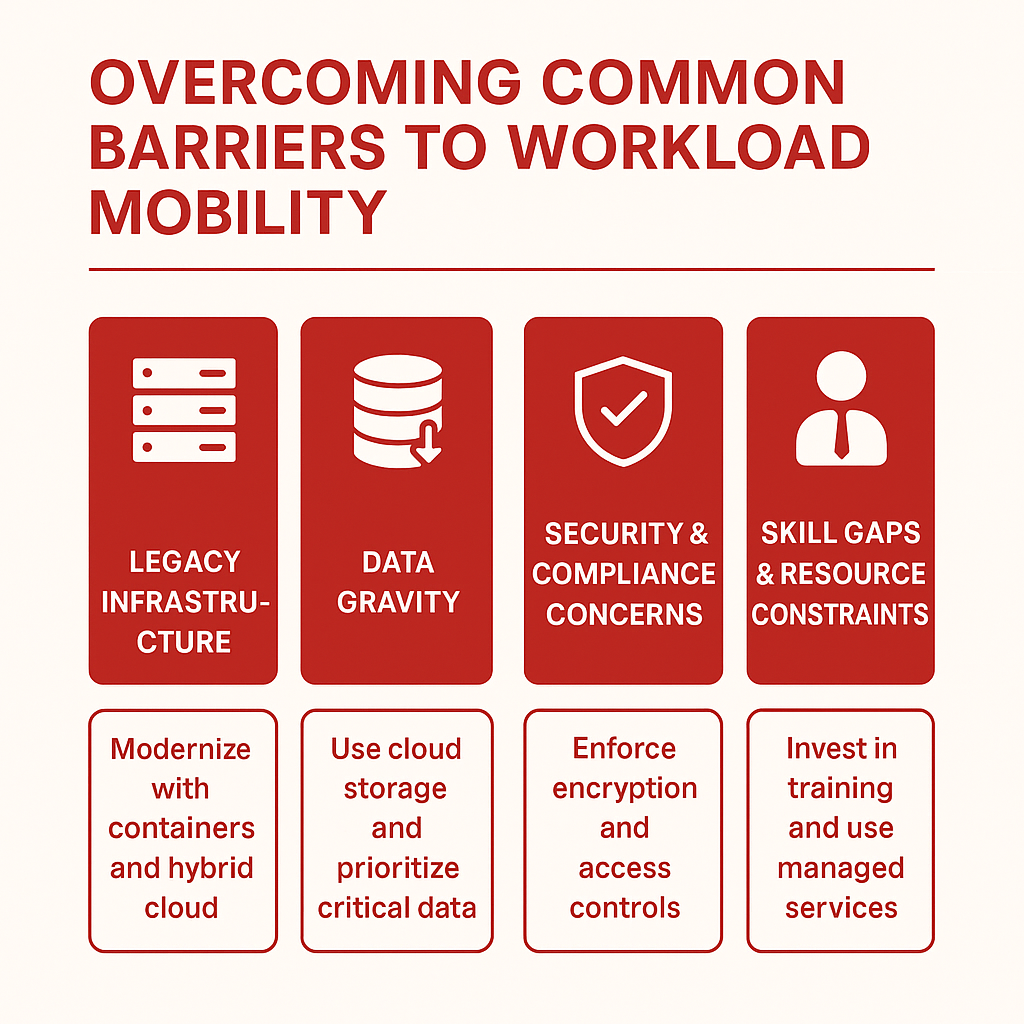
1. Legacy Infrastructure
Outdated hardware and on-premises systems often lack compatibility with modern cloud platforms. This creates integration issues that make migration slow, costly, and risky.
Solution: Modernize gradually by adopting virtualization, containerization (e.g., Kubernetes, Docker), and hybrid cloud strategies that bridge the gap between old and new systems.
2. Data Gravity
Large datasets are difficult and expensive to move, often creating a “gravity” that locks workloads into specific environments.
Solution: Implement data tiering, compression, and deduplication. Use cloud-native storage solutions designed for mobility, and prioritize moving only mission-critical data first.
3. Security & Compliance Concerns
Organizations fear losing control of sensitive data during migration, especially when regulations such as GDPR, HIPAA, or industry-specific compliance come into play.
Solution: Use encryption (in transit and at rest), strict access controls, and compliance-aware migration tools. Partner with providers that have strong certifications and proven compliance frameworks.
4. Skill Gaps & Cultural Resistance
Many IT teams lack the expertise to manage hybrid or multi-cloud environments. Resistance from staff used to traditional systems can further slow adoption.
Solution: Invest in training, foster a culture of cloud-first thinking, and leverage managed services or trusted partners to fill skill gaps.
5. High Costs & Resource Constraints
Migration projects often stall because of unexpected expenses, licensing challenges, or lack of budget allocation.
Solution: Conduct thorough cost assessments before migration. Use automation to reduce manual labor, and adopt consumption-based pricing models to align costs with actual usage.
Best Practices for Successful Workload Mobility
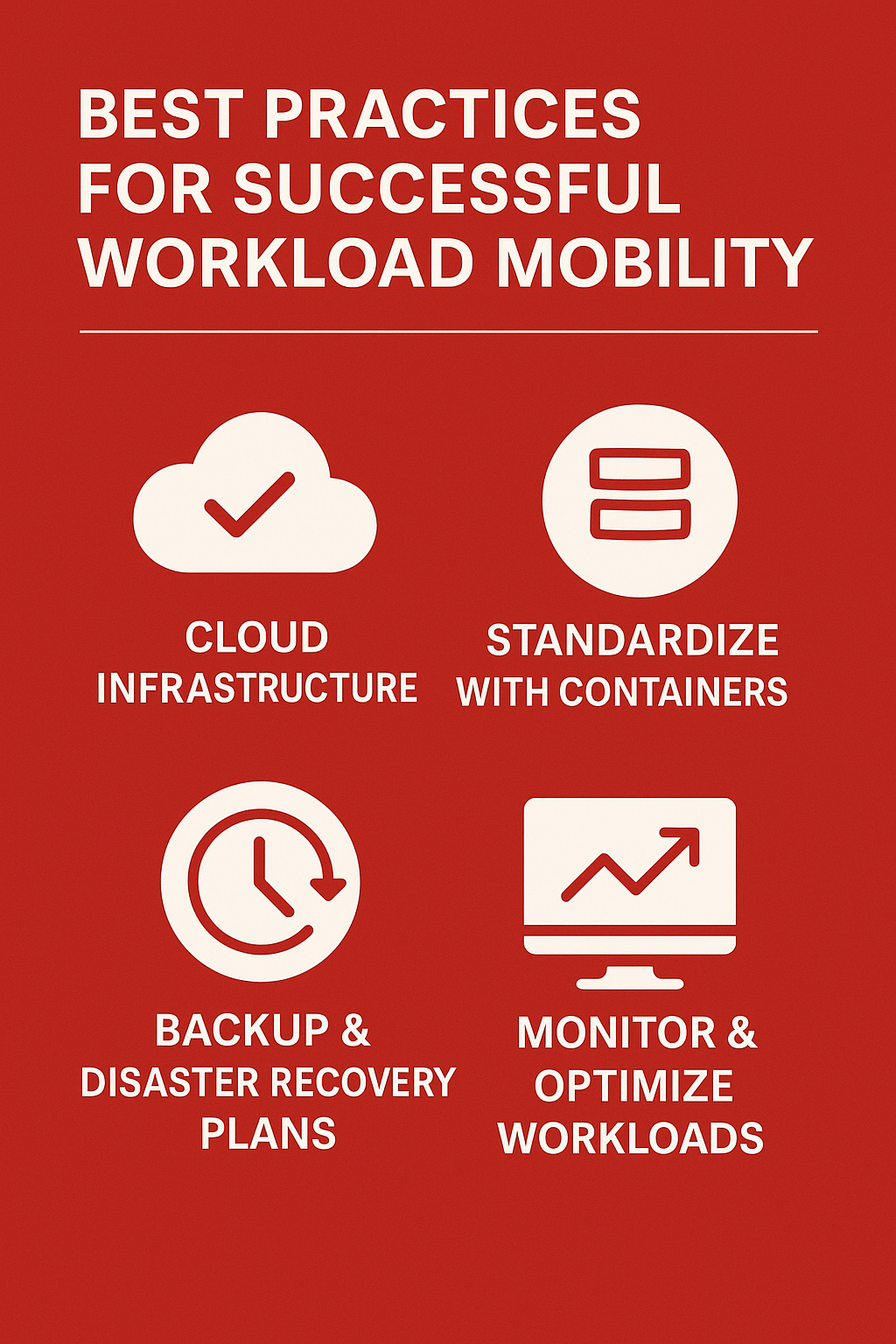
- Adopt a cloud-smart strategy rather than cloud-first, choose the right environment for each workload.
- Standardize infrastructure using containers and orchestration tools.
- Implement robust backup and disaster recovery plans to minimize downtime.
- Continuously monitor and optimize workloads to ensure performance after migration.
Final Thoughts
Workload mobility is a cornerstone of business resilience. While challenges exist, from legacy systems to compliance risks, businesses that address these barriers head-on unlock flexibility, scalability, and faster innovation. By adopting modern tools, building the right skills, and leveraging expert IT services, organizations can confidently move workloads where they create the most value.
Frequently Asked Questions (FAQ)
1. What is workload mobility?
Workload mobility is the ability to move applications, data, and processes seamlessly across cloud, on-premises, or hybrid environments without disrupting performance or compliance.
2. Why is workload mobility important for businesses?
It enables flexibility, reduces downtime, improves scalability, and ensures organizations can adapt quickly to changing market conditions or compliance requirements.
3. What are the main challenges to workload mobility?
The most common challenges include legacy infrastructure, large data sets (data gravity), security and compliance risks, skill shortages, and high migration costs.
4. How can companies overcome security concerns during migration?
By using end-to-end encryption, multi-factor authentication, strict access controls, and ensuring providers comply with industry standards like GDPR or HIPAA.
5. What tools help with workload mobility?
Containers (Docker, Kubernetes), orchestration platforms, cloud-native storage, and automation tools streamline migration and make environments more portable.