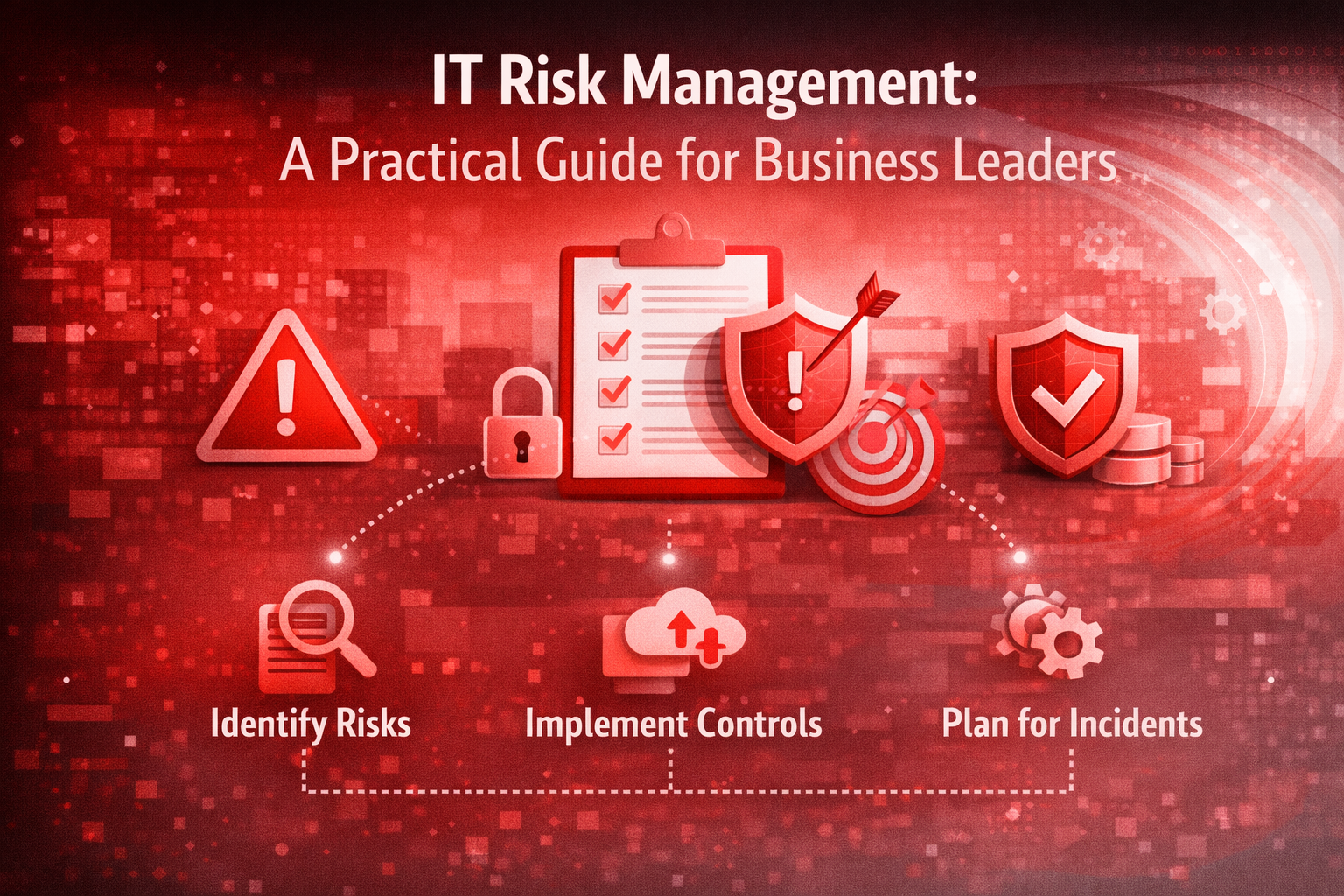
Technology is the backbone of everything we do. That means a single cyber attack or a system failure can do more than just slow us down, it can tank our reputation and halt our growth. We have to treat IT risk with the same urgency we treat our bottom line, because today, they’re the same thing.
At Adivi helps businesses bridge this gap by turning complex vulnerabilities into streamlined, enterprise-grade security.IT risk management helps business leaders identify, assess, and reduce technology-related risks while enabling innovation and resilience. This practical guide explains what IT risk management is, why it matters, and how leaders can implement it effectively.
Key Takeaways
- IT risk management aligns technology with business objectives
- Cybersecurity, operational, compliance, and vendor risks must be addressed
- Risk identification and prioritization improve decision-making
- Governance, monitoring, and incident response are critical
- Employee awareness strengthens risk management efforts
- Managed services help scale IT risk management effectively
What Is IT Risk Management?
IT risk management is the process of identifying, evaluating, and mitigating risks associated with technology systems, data, and processes. It ensures that IT supports business objectives while minimizing exposure to threats and disruptions.
Effective IT risk management balances security, performance, and compliance without slowing business operations.
Why IT Risk Management Matters to Business Leaders
IT risks affect more than just IT teams. Poorly managed risks can lead to:
- Financial losses and downtime
- Data breaches and regulatory penalties
- Loss of customer trust
- Delayed growth and innovation
Common Types of IT Risks
Cybersecurity Risks
- Phishing, ransomware, and malware attacks
- Unauthorized access and data breaches
Operational Risks
- System outages and hardware failures
- Poor change management
- Lack of disaster recovery planning
Compliance and Legal Risks
- Failure to meet data protection regulations
- Inadequate audit controls and documentation
Third-Party and Vendor Risks
- Security weaknesses in suppliers and partners
- Overreliance on external service providers
Strategic and Technology Risks
- Outdated systems
- Poorly planned digital transformation initiatives
A Practical IT Risk Management Framework
1. Identify IT Risks
Start by understanding where risks exist:
- Critical systems and applications
- Sensitive data and business processes
- User access and endpoints
- Third-party connections
2. Assess and Prioritize Risks
Not all risks are equal. Leaders should:
- Evaluate likelihood and potential impact
- Classify risks as low, medium, or high
- Focus resources on the most critical threats
3. Implement Risk Mitigation Controls
Risk mitigation involves reducing exposure through:
- Strong access controls and authentication
- Security patching and system updates
- Network and endpoint protection
- Data encryption and backups
4. Establish Governance and Policies
Clear governance ensures accountability. This includes:
- IT and security policies
- Defined roles and responsibilities
- Compliance and audit processes
5. Monitor Risks Continuously
IT risks change constantly. Ongoing monitoring helps:
- Detect new threats early
- Track control effectiveness
- Adjust strategies as needed
6. Prepare Incident Response and Recovery Plans
Even with controls in place, incidents can occur. Leaders should ensure:
- Incident response plans are documented
- Disaster recovery planning with systems assessments helps ensure business continuity plans are tested.
- Teams know how to respond during disruptions
7. Educate Employees and Stakeholders
Human behavior plays a major role in IT risk. Businesses should:
- Provide cybersecurity awareness training
- Communicate policies clearly
- Encourage a risk-aware culture
8. Leverage Managed IT and Risk Services
Many organizations partner with managed service providers to:
- Gain specialized risk and security expertise
- Monitor systems 24/7
- Scale risk management as the business grows
The Role of Leadership in IT Risk Management

Business leaders set the tone for risk management by:
- Prioritizing cybersecurity investments
- Supporting governance and accountability
- Aligning IT risk strategies with business goals
Conclusion
IT risk management is no longer optional for modern businesses it is essential for stability, compliance, and growth. By taking a structured, practical approach, business leaders can reduce technology risks while enabling innovation and operational efficiency.
Organizations that actively manage IT risks are better prepared to handle disruptions, protect valuable data, and build trust with customers and stakeholders.
Don’t leave your business’s future to chance. to turn your technology from a source of stress into a competitive advantage. Explore our managed IT and security services today.
Frequently Asked Questions (FAQ)
Is IT risk management only for large organizations?
No. Businesses of all sizes face IT risks and benefit from structured risk management.
How often should IT risks be assessed?
At least annually, and whenever there are significant changes to systems or operations.
Who is responsible for IT risk management?
While IT teams manage controls, business leaders are responsible for oversight and strategy.
Can IT risk management slow down business innovation?
When done correctly, it supports innovation by reducing uncertainty and enabling informed decision-making.