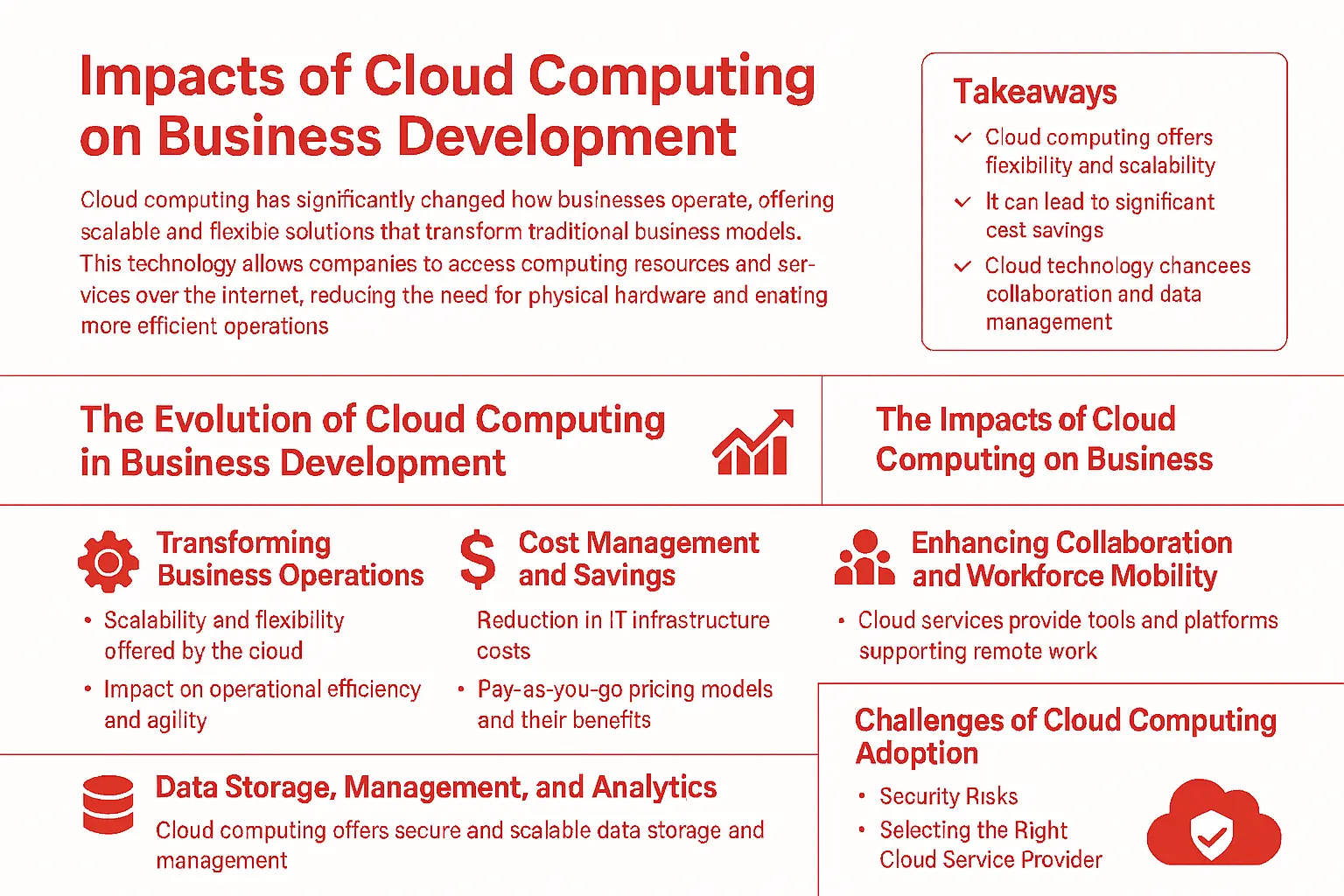
Cloud computing has significantly changed businesses’ operations, offering scalable and flexible solutions that transform traditional business models. This technology allows companies to access computing resources and services over the Internet, reducing the need for physical hardware and enabling more efficient operations.
In this blog, you’ll learn about the profound effects of cloud computing on businesses, including enhanced efficiency, cost reductions, and improved collaboration.
Takeaways
- Cloud computing offers flexibility and scalability.
- It can lead to significant cost savings.
- Cloud technology enhances collaboration and data management.
The Evolution of Cloud Computing in Business Development
The transformation of business operations through cloud computing marks a significant shift in how companies leverage technology. The evolution of cloud computing in the business landscape has been marked by rapid growth and widespread adoption, driven by a blend of technological advancements and changing business needs.
This evolution showcases the shift from traditional on-premises IT solutions to more dynamic, scalable, and cost-effective cloud-based models.
Historical perspective on cloud computing adoption
Cloud computing’s journey from a niche concept to a core component of business infrastructure highlights its pivotal role in modernizing business operations. Initially, the adoption was slow, hindered by concerns over security and a general lack of understanding about the benefits of cloud computing.
Over time, as the technology matured and success stories began to emerge, businesses of all sizes started to recognize the value of cloud computing in enhancing their operational efficiency and scalability.
Key drivers of cloud computing growth in the business sector
Several factors have contributed to the accelerated growth of cloud computing within the business sector. Reducing IT spending while boosting operational efficiency has been a significant driver, encouraging companies to move from capital-intensive on-premises infrastructure to more flexible and cost-effective cloud solutions.
Additionally, the rise of mobile computing, the increasing importance of big data analytics, and the integration of artificial intelligence into business processes have necessitated the adoption of cloud computing services. These technologies require substantial computing power and storage capacity, which cloud platforms like Google Cloud Engine, Microsoft Azure, and various SaaS solutions readily provide.
The Impacts of Cloud Computing on Business

1. Transforming Business Operations
Integrating cloud computing into business operations has marked a significant shift in how companies approach their IT infrastructure and resource management. The cloud offers unparalleled scalability and flexibility, enabling businesses to adjust their computing resources based on current needs.
This adaptability is crucial for adapting to market changes, handling varying workloads, and supporting growth without the constraints of traditional physical infrastructure.
Scalability and flexibility offered by the cloud
Cloud computing’s scalability allows businesses of all sizes, from small to large enterprises, to scale their computing resources up or down based on demand. This level of flexibility is unprecedented, ensuring that businesses can manage high-traffic periods, launch new projects, or expand their operations without significant upfront investments in server hardware or data centers.
The pay-as-you-go pricing model further enhances this flexibility, allowing businesses to optimize their expenses based on actual usage.
Impact on operational efficiency and agility
The cloud’s ability to provide on-demand access to computing resources dramatically improves operational efficiency and business agility. Companies can deploy new applications, access data from anywhere using an internet connection, and rapidly respond to market changes.
This agility supports faster product development cycles, improves business processes, and helps companies seize new opportunities faster, especially as the impact of cloud computing on the retail industry continues to reshape inventory management, customer engagement, and data-driven decision-making. Cloud platforms like Microsoft Azure, Google Cloud, and Amazon Web Services offer services that support these efforts, from cloud storage and virtual machines to advanced analytics and machine learning capabilities, representing some of the leading cloud service models available.
2. Cost Management and Savings
Cloud computing in business offers various advantages, and one of the most significant benefits is cost management and savings. Companies can leverage cloud computing services to reduce or even eliminate expenses related to IT infrastructure. Here are some key points related to cost management and savings in cloud computing:
Reduction in IT infrastructure costs
Businesses can significantly reduce purchasing, maintaining, and upgrading IT infrastructure costs by leveraging cloud services. Cloud computing eliminates the need for on-premises data centers and the associated energy, space, and maintenance costs.
Pay-as-you-go pricing models and their benefits
The pay-as-you-go model offered by cloud providers ensures that businesses only pay for the computing resources they use. This model provides significant cost savings and eliminates the need for large upfront investments in IT infrastructure.
3. Enhancing Collaboration and Workforce Mobility
Cloud services provide tools and platforms supporting remote work, making collaboration easier for teams regardless of location. Many businesses have successfully leveraged cloud technology to enhance productivity and maintain continuity during challenges such as natural disasters or pandemics.
Cloud computing offers diverse tools and platforms designed to facilitate remote work. These solutions enable employees to access essential applications, data, and resources from virtually anywhere with an internet connection.
By leveraging cloud-based collaboration tools, businesses empower their workforce to communicate seamlessly and work together efficiently, irrespective of geographical barriers.
4. Data Storage, Management, and Analytics
Cloud computing has revolutionized data storage and management, offering businesses secure and scalable solutions. Whether it’s a private cloud infrastructure for enhanced control or tapping into public cloud computing resources for agility, companies can access and manage data more effectively than ever.
Additionally, leveraging big data analytics through cloud services enables organizations to gain actionable insights from their data, driving better decision-making and strategic planning. From accounting software to complex business process management systems, the cloud offers a central location for storing and processing data efficiently, accessible from anywhere with an internet connection.
5. Security and Compliance in the Cloud
Improvements in cloud security technologies have addressed many initial concerns, offering robust protections for stored data. Cloud providers implement encryption, access controls, and regular security updates to safeguard data stored in their systems.
Furthermore, cloud solutions often undergo rigorous compliance assessments to ensure compliance with industry regulations and standards. Cloud computing platforms like Microsoft Azure and Google App Engine provide tools and features to help businesses manage databases securely and mitigate security incidents effectively, ensuring compliance with various regulatory requirements.
6. Innovation and Competitive Advantage
The agility and flexibility offered by cloud computing facilitate faster innovation, allowing businesses to develop and deploy new products and services swiftly. Small businesses, in particular, can benefit from the pay-as-you-go model of cloud computing services, avoiding significant upfront investments in server hardware and infrastructure.
This easy access to computing power and storage space democratizes innovation, leveling the playing field for startups and established enterprises. Moreover, cloud-based applications and platforms like Software as a Service (SaaS) offer energy efficiency and scalability, allowing businesses to scale their operations as they grow.
Cloud computing empowers businesses to host services, manage applications, and store data efficiently, contributing to business growth and continuity in an increasingly digital world. These advantages align with the leading cloud service models, offering cloud systems hosted on a cloud platform that drives business growth and innovation.
Challenges of Cloud Computing Adoption

Security Risks
Adopting cloud computing introduces significant security risks, primarily due to storing data on remote servers accessible through the Internet. This method of data storage can expose sensitive information to potential threats, including data breaches, unauthorized access, and cyberattacks.
Therefore, businesses must prioritize robust security measures and protocols to safeguard their data when transitioning to the cloud.
Selecting the Right Cloud Service Provider
The decision to migrate to the cloud comes with the crucial task of selecting the most suitable cloud provider. This choice can significantly impact a business’s cloud strategy, as different providers offer varying levels of security, services, and support.
To minimize risks and ensure a seamless transition, organizations must conduct thorough research, evaluate potential providers’ reputation and track record, and consider their specific needs and objectives when making this critical decision.”
Deployment Model Selection
One of the significant challenges in adopting cloud computing is the selection of the appropriate deployment model. Businesses must carefully assess their needs and challenges when choosing between private, public, and hybrid cloud solutions.
Each of these models offers distinct advantages and poses unique challenges, making it imperative for organizations to align their cloud strategy with their specific requirements.
Managing Computing Resources
Effectively managing computing resources is complex, particularly for small businesses with limited IT expertise. Cloud platforms offer scalability, allowing companies to adjust their computing power and storage space based on demand. However, optimizing resource usage and cost control can be challenging.
Businesses must balance resource allocation and cost management to derive maximum value from cloud investments.
Integration Complexity
Integrating cloud-based solutions with existing systems and applications can be a daunting endeavor. Many businesses rely on various software applications, including accounting software, operating systems, and business process management tools. Ensuring compatibility and seamless integration with these systems can pose a considerable challenge.
This often requires the expertise of software developers and cloud partners to navigate the complexities of integration successfully.
Business Continuity
Ensuring business continuity is a critical consideration during business cloud computing adoption. Downtime or data loss can severely impact productivity, customer satisfaction, and revenue. Businesses must implement robust backup and recovery strategies and disaster recovery plans to mitigate these risks.
These measures are essential to ensure the uninterrupted operation of critical business functions.
Final Thoughts

Cloud computing has transformed how businesses work, making things more flexible and cheaper. It happened because businesses needed to work better and started using advanced technology like AI.
Cloud computing helps all types of businesses, big and small, to work together and manage their information well. But sometimes, it can be tricky, especially regarding security and managing everything.
In the future, new technologies like AI and IoT will keep changing cloud computing. They’ll improve it, and more people will use it in different industries.
If your business uses the cloud solution, it can stay competitive and keep growing, no matter what. Do you want to use cloud computing to make your business even better? Adivi can help. We have solutions for your business so you can do more in the digital world.
FAQs
What is cloud computing?
Cloud computing delivers computing services—including servers, storage, databases, networking, analytics, and more—over the Internet, offering faster innovation, flexible resources, and economies of scale.
How does cloud computing save costs for businesses?
Cloud computing reduces the need for physical servers and hardware, lowers energy consumption, and offers a pay-as-you-go pricing model, meaning businesses only pay for what they use.
Can small businesses benefit from cloud computing?
Yes, small businesses can benefit from cloud computing by accessing the same powerful computing resources that larger companies use without significant upfront investments.
Are there security risks with cloud computing?
While cloud computing does pose security risks, reputable cloud service providers implement robust security measures to protect data and comply with regulatory standards, making cloud solutions secure for most business applications.
What is the future of cloud computing in business?
The future of cloud computing includes:
- More widespread adoption across different industries.
- Integration with AI and IoT for more innovative solutions.
- Continuous improvements in security and compliance measures to protect business data.