DevOps is a transformative approach that enhances collaboration between software development and operations, leading to quicker and more efficient projects. It’s especially vital in cloud design, improving both architecture and service delivery.
By adopting DevOps, organizations gain scalable, reliable, and agile cloud solutions through practices like continuous integration and delivery (CI/CD), which smoothly integrate updates with minimal disruption.
This blog will explore actionable DevOps strategies for the cloud, enhancing workflow, performance, and security.
Ready to elevate your cloud architecture? Join us as we delve into the practical application of DevOps in cloud design.
Overview of DevOps
DevOps is an innovative approach that merges software development and IT operations to shorten the development lifecycle, aligning closely with business goals through frequent updates and features. It emphasizes collaboration, automation, and continuous processes.
DevOps has grown from Agile practices to meet the demand for more agile and high-performing software development and deployment, especially as organizations adopt complex, scalable cloud technologies.
This synergy with cloud technology enhances scalability, flexibility, and resilience, simplifying processes and boosting cloud capabilities to adapt and evolve with business and technological shifts. Integrating DevOps with cloud infrastructure maximizes efficiency and innovation, creating robust and adaptable systems.
Key DevOps Practices for Cloud Design
DevOps practices are essential for enhancing cloud design, focusing on automation, rapid deployment, and system stability. Here’s a look at some foundational practices:
- Continuous Integration (CI) and Continuous Delivery (CD): CI and CD are central to DevOps, facilitating the rapid integration of code changes into a shared repository where automated tests are conducted. This setup allows for the early detection of issues and the smooth addition of new features. CD builds on CI by automating the deployment of code changes that pass tests directly into production, speeding up delivery and ensuring software reliability, key for innovation and customer satisfaction in cloud services.
- Infrastructure as Code (IaC): IaC is a pivotal practice in cloud design, where computing infrastructure is managed and provisioned through code instead of manual processes. This method helps automate the management and provisioning of resources, resulting in faster development cycles and consistent environments. By treating infrastructure like software, IaC minimizes human error and accelerates setup and deployment within cloud settings.
- Monitoring and Performance Tuning: Monitoring and performance tuning are crucial for maintaining the health and efficiency of cloud services. Real-time monitoring tools offer vital insights into application and infrastructure performance, supporting proactive maintenance and quick issue resolution. Performance tuning adjusts elements like configurations and resource distribution to optimize system efficiency and responsiveness. These practices ensure that cloud environments remain stable and adaptable, capable of handling demand shifts and disruptions efficiently.
Benefits of Integrating DevOps in Cloud Architecture
Before delving into the specifics, it’s essential to understand how DevOps integration enhances cloud architecture across various dimensions:
- Faster Deployment Cycles and Improved Scalability
Integrating DevOps with cloud architecture significantly quickens deployment cycles through automated pipelines, reducing manual efforts and enabling frequent, incremental updates. This rapid deployment capability, combined with the inherent scalability of cloud environments, allows applications to dynamically and efficiently adjust to changing demands. - Enhanced Collaboration Across Project Teams
DevOps encourages a collaborative culture where developers, operations teams, and quality assurance personnel work closely throughout the software lifecycle. This collaboration is particularly effective in cloud architectures, where teams can access and interact with the same resources, leading to a more unified development environment and higher quality outcomes. - Increased Efficiency and Reduced Costs Through Automated Processes
Automation, a fundamental element of both DevOps and cloud computing, streamlines many processes, reducing the need for human intervention. This not only decreases the likelihood of errors but also conserves resources, allowing teams to focus on strategic tasks. Additionally, the cloud’s pay-as-you-go model helps optimize costs by eliminating the need to maintain unnecessary capacity.
Challenges and Solutions in DevOps for Cloud Design
Understanding the challenges and strategic solutions in implementing DevOps within cloud architecture is essential before exploring specific issues:
- Cultural Shifts
- Challenge: Adopting DevOps necessitates a substantial organizational cultural and mindset change. Teams used to siloed operations may struggle with transitioning to a collaborative and transparent DevOps approach.
- Solution: Promote an inclusive culture emphasizing communication, collaboration, and continuous learning. Implement joint training sessions, cross-departmental meetings, and open forums to foster inter-team cooperation. Leadership should exemplify and support DevOps principles like agility and flexibility.
- Integration Complexities
- Challenge: Integrating existing systems with new DevOps tools and methodologies can be daunting, especially in environments that mix legacy systems and modern cloud technologies.
- Solution: Start with small pilot projects that offer quick wins and expand as confidence and expertise grow. Use middleware and integration tools to connect old and new technologies, choosing tools supporting legacy and cloud platforms to streamline the integration process.
- Security Concerns
- Challenge: Transitioning to a DevOps model, particularly one integrated with cloud computing, introduces security risks due to the rapid release cycles.
- Solution: Integrate security deeply into the DevOps workflow, known as DevSecOps. Incorporate security checks at every stage of development, use automated tools for vulnerability scanning, enforce stringent access controls, and provide ongoing security training for all team members.
Tools and Technologies Supporting DevOps in Cloud Design
To enhance and support DevOps in cloud environments, various technologies are crucial for automating and refining processes throughout the development and operations lifecycle:
- Jenkins: Jenkins, an open-source automation server, allows developers to build, test, and deploy applications efficiently. It automates development stages and supports continuous integration and delivery (CI/CD) in cloud design, offering a vast plugin ecosystem for integration with numerous cloud platforms and tools.
- Docker: Docker facilitates the creation, deployment, and operation of applications using containers, which encapsulate the application and its dependencies. This containerization ensures consistency across different environments and improves scalability and efficiency in cloud architectures, essential for effective DevOps practices.
- Kubernetes: With the rise of containerization, Kubernetes has become vital for managing large numbers of containers. It automates the deployment, scaling, and management of containerized applications, ensuring they operate correctly across cloud environments, thereby enhancing availability and resource management.
- Terraform: Terraform, an infrastructure as code (IaC) tool, allows teams to define and provision cloud infrastructure through a high-level configuration language. This helps DevOps teams manage cloud resources predictably and repeatably, reducing manual errors and improving consistency across environments.
Implementing DevOps in Your Cloud Design Strategy
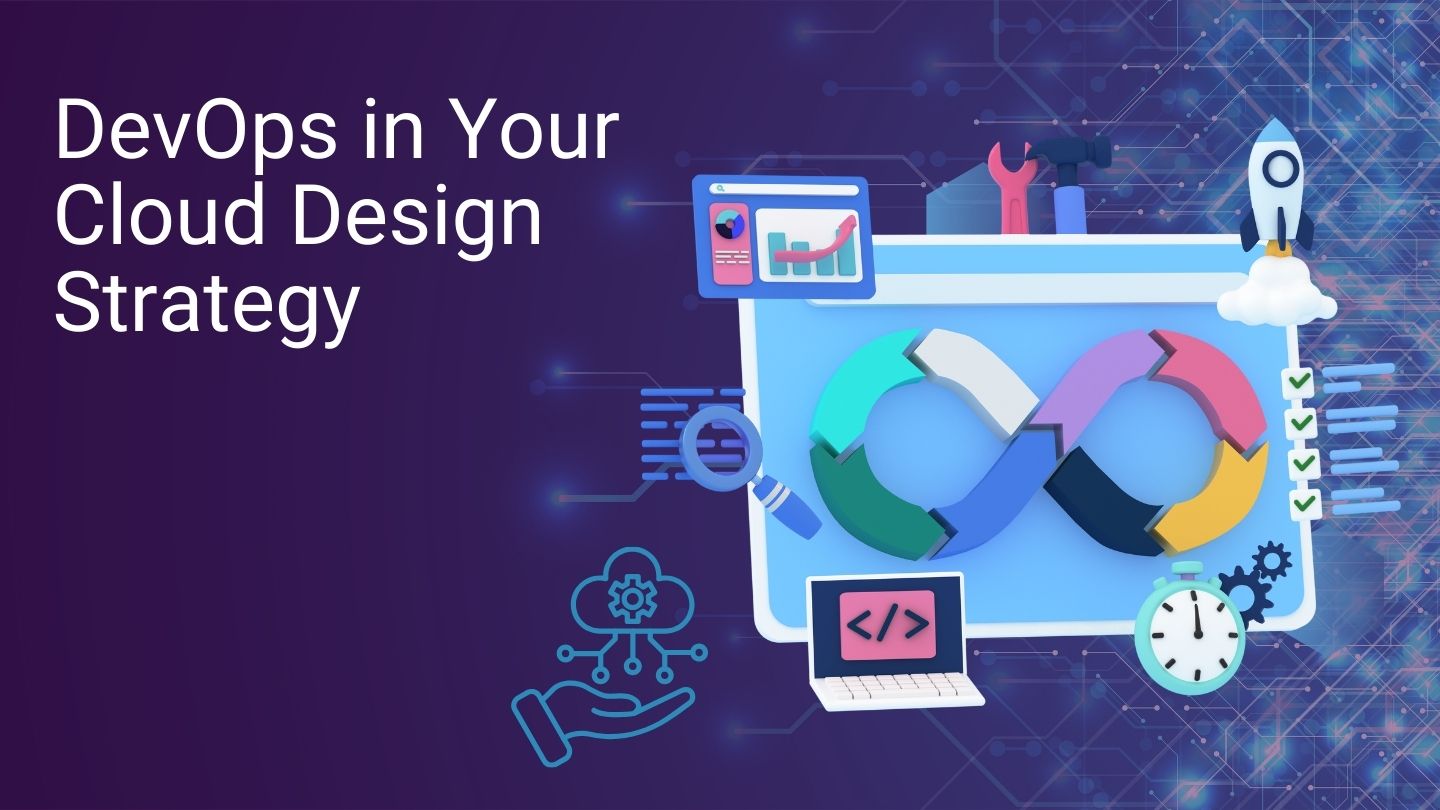
Implementing DevOps into your cloud strategy involves strategic steps and best practices to ensure effectiveness:
- Assess Current Practices: Start by evaluating your existing development and operations to pinpoint improvement areas and potential efficiency gains through DevOps.
- Define Your DevOps Goals: Set clear objectives for what you aim to achieve with DevOps, such as faster deployments, improved reliability, or enhanced collaboration.
- Select Appropriate Tools: Opt for tools that align with your needs, such as Jenkins for continuous integration, Docker for containerization, Kubernetes for orchestration, and Terraform for infrastructure as code.
- Pilot DevOps with a Small Project: Apply DevOps to a pilot project to troubleshoot and adjust processes gradually, serving as a proof of concept.
- Implement Infrastructure as Code (IaC): Manage your infrastructure through code for more efficient resource management, consistent environments, and quicker deployments.
- Automate Everything Possible: Automate repetitive tasks like testing, deployments, and provisioning to minimize errors and free up strategic focus.
- Train Your Teams: Provide training to ensure all team members grasp DevOps concepts and tools, possibly through role-specific sessions.
- Foster a Collaborative Culture: Promote a culture of continuous improvement and collaboration, incorporating regular feedback and joint planning.
- Monitor and Optimize Continuously: Continuously track DevOps outcomes, using data to refine processes regularly.
- Scale DevOps Practices: Extend successful DevOps practices beyond pilot projects, standardizing these across your organization for a cohesive approach.
Tips for Training Teams and Implementing Process Changes:
- Hands-on Workshops: Engage teams with direct interaction with DevOps tools.
- Regular Reviews: Conduct sessions to evaluate what works and what doesn’t for ongoing improvements.
- Mentorship Programs: Pair seasoned DevOps practitioners with new members for skill transfer.
- Clear Documentation: Keep detailed records of processes, tools, and configurations to support training and troubleshooting.
Conclusion
Adopting DevOps practices in cloud design reshapes how digital infrastructure is developed, deployed, and maintained. From continuous integration and delivery (CI/CD) to infrastructure as code (IaC), DevOps accelerates deployment cycles, enhances scalability, and fosters collaborative, agile teams.
With tools like Jenkins, Docker, Kubernetes, and Terraform, teams can automate key processes, reduce errors, and improve overall cloud efficiency. This approach empowers organizations to respond quickly to change, maintain robust cloud environments, and lower operational costs.
However, successful DevOps adoption requires a thoughtful strategy—starting with small pilot projects, fostering a culture of continuous improvement, and upskilling teams with targeted training. Overcoming challenges like integration hurdles and cultural resistance is essential to unlocking DevOps’ full value.
In today’s digital landscape, agility and innovation are non-negotiable. Partnering with experienced technology leaders like Adivi, who specialize in cloud architecture and design, can enhance your cloud strategy and ensure long-term success.
Start smart. Scale fast. Optimize endlessly—with DevOps at the core of your cloud strategy.
FAQs
Can DevOps practices be applied to any cloud environment?
Yes, DevOps practices are versatile and can be applied to any cloud environment, whether it’s public, private, or hybrid. The key is to adapt the tools and workflows to suit the specific characteristics and requirements of the environment in question.
How do DevOps practices improve security in cloud environments?
DevOps integrates security practices directly into the development and deployment processes, a practice known as DevSecOps. This approach ensures that security considerations are not afterthoughts but are integrated from the start, with automated security testing and compliance checks throughout the lifecycle.
Are there any risks associated with implementing DevOps in cloud design?
The primary risks include potential disruptions during the transition phase, especially if existing workflows are deeply entrenched. There’s also the challenge of ensuring all team members are up to speed with new practices and tools. Mitigating these risks involves thorough planning, gradual implementation, and continuous training.
What is the role of CI/CD in DevOps for cloud design?
CI/CD (Continuous Integration and Continuous Delivery) plays a pivotal role by automating code integration, testing, and deployment. This ensures faster releases, early bug detection, and stable production environments, which are critical in agile cloud infrastructure.
How does Infrastructure as Code (IaC) benefit DevOps teams?
IaC allows infrastructure to be provisioned and managed through code, enabling consistent environments, repeatable deployments, and fewer manual errors. This accelerates cloud operations and makes scaling more predictable and controlled.
How can teams overcome resistance to adopting DevOps?
Resistance can be mitigated by clear communication of benefits, leadership support, hands-on training, and involving stakeholders early in the transformation. Showing quick wins through pilot projects also builds trust and momentum.
What are common tools used in DevOps for security?
Tools like Aqua Security, Snyk, and HashiCorp Vault are widely used. They offer container scanning, secrets management, and compliance enforcement, supporting a DevSecOps approach that integrates security into the development lifecycle.
Is DevOps suitable for startups or only large enterprises?
DevOps is highly adaptable. Startups benefit from faster iteration, streamlined development, and automation, while large enterprises use DevOps for scalability, risk reduction, and managing complex systems across teams and regions.