You rely on technology. Even small businesses with just one or two employees use email, cloud storage, payment systems, or accounting tools daily. If any of that fails, your work stalls.
For some business owners, managing IT may seem unnecessary or too complex. But that thinking can backfire. Technology failures don’t care about your headcount. They interrupt your work and cost you money, regardless of size.
The better question isn’t “Am I too small?” It’s “Can I afford not to be prepared?”
Discover how proactive IT management protects your bottom line.
What Is Managed IT and What Does It Include?
Managed IT services involve outsourcing your technology needs to a third-party provider. It’s like having an IT department without needing to hire staff.
Most plans include:
- Monitoring and fixing systems
- Cybersecurity tools
- Data backups and recovery
- Cloud support
- Help desk services
Instead of calling someone after something breaks, you get ongoing support to prevent those problems in the first place.
Can a Business Be Too Small for Managed IT?
This is a question many new business owners ask. The answer is simple: no.
Using technology exposes you to risk, whether just one laptop or a handful of devices.
Waiting too long increases your exposure
The longer you run without support, the more likely a minor issue will escalate into a serious one. A malware infection, lost file, or system failure can cause significant damage, both financially and to one’s reputation.
Small businesses are no longer off the radar
Remote work and cloud applications have transformed the way businesses operate. You’re online constantly. That connection opens the door to more threats, even if you think you don’t have “valuable” data.
Why Should Small Businesses Get Managed IT Services?
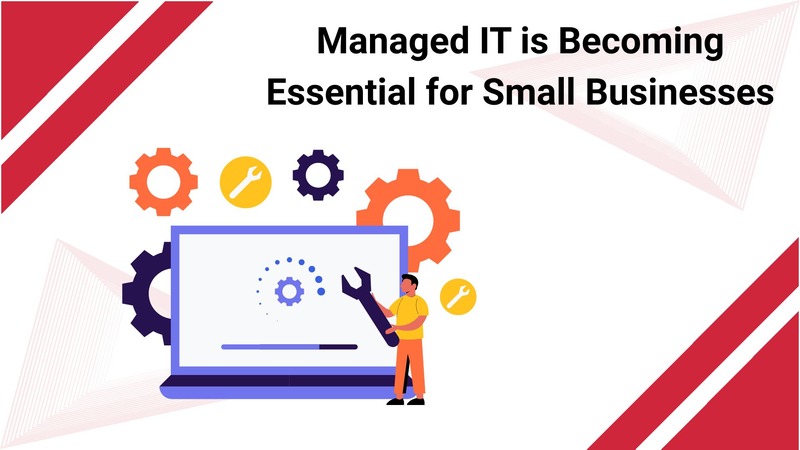
Support isn’t just for companies with servers or big teams. It’s for any business that can’t afford downtime.
Small teams are often easier targets
Hackers know small businesses often lack strong defenses. That makes them easier to breach.
Tech problems hit harder
If your system crashes, no internal IT team can resolve the issue. That means lost hours, missed sales, and stressed-out clients.
Managed IT is affordable now
Many providers offer entry-level plans. You can pay for what you need and upgrade later if you grow.
You get time back
Instead of handling tech alone, you can focus on running your business. The provider handles the rest in the background.
Is Your Business Too Small for Managed IT? – The Common Assumptions
“We don’t have many devices”
That doesn’t mean you’re safe. Even one compromised laptop can result in the loss of data or a security breach.
“We’re just starting out”
The earlier you put proper systems in place, the easier it is to grow without disruption.
“We use simple tools”
No tool is too simple to fail. Passwords still get stolen, apps go down, and files get lost.
Why Small Businesses Are Ideal Clients for Managed IT
Small businesses gain the most from proactive support. You may not need everything a larger company does, but you still need the essentials.
You don’t need to hire or train anyone. You don’t need to guess when something is wrong. You don’t need to fix issues yourself.
With the right plan, you get:
- Scalable coverage that grows with your business
- Fast help when problems come up
- Protection that works without constant oversight
And most of all, you avoid the big, expensive problems that come with trying to handle everything on your own.
Key Benefits of Managed IT for Small Businesses
Managed IT support provides more than just technical fixes—it offers structure, protection, and long-term savings. Here’s how it helps you stay ahead, even with a small team and limited resources:
Predictable monthly costs
You pay a flat monthly rate. That means you can budget accurately without worrying about sudden repair bills or hidden fees. IT support becomes a fixed business expense instead of an unpredictable one.
Faster issue resolution
Your provider immediately intervenes when a system crashes or a tool stops functioning. You don’t waste hours trying to troubleshoot something you’re not trained to fix. That keeps your operations moving and your team focused on work.
Better cybersecurity
Small businesses are frequent targets for phishing, ransomware, and malware. Managed IT providers add layers of protection—such as firewalls, antivirus software, and 24/7 threat monitoring—to block attacks and identify risks before they spread.
Peace of mind
With continuous monitoring, you’re covered even when you’re not working. You don’t have to stay on alert for software updates, suspicious activity, or backups. It’s handled behind the scenes, reducing your mental load.
Easier compliance
Regulations change. So do data privacy laws. A managed IT provider can help you meet requirements tied to your industry, like HIPAA for healthcare, PCI for payment processing, or GDPR for data protection. They maintain records, apply patches, and close security gaps before they lead to legal issues.
Streamlined operations
Unreliable tech slows everything down. Managed IT helps keep your devices, software, and networks together efficiently. Issues get resolved before they interrupt your business.
Expert-level support
You get access to a team that stays current on new tools, risks, and policies. Unlike an overworked in-house IT person, managed providers bring broad knowledge and experience you can rely on.
Cost savings over time
Building an internal IT team is expensive—salaries, benefits, and training add up fast. With managed IT, you get that same expertise without the overhead. By preventing problems before they escalate, you avoid paying for major repairs or recovery costs.
Scalable solutions
As your business grows, so will your IT needs. Managed IT providers can adjust services as you add employees, launch new tools, or expand into new locations. You won’t have to rebuild your systems—you’ll already be covered.
Fewer disruptions
Proactive maintenance leads to fewer outages, slower degradation, and a lower likelihood of losing access to critical tools. Instead of reacting to problems, your systems stay optimized and responsive.
How to Tell If You’re Ready for Managed IT
Ask yourself a few questions:
- Have you had any tech issues in the past year?
- Do you store any customer or payment data?
- Do you use cloud services daily?
- Do you rely on outside help to fix problems?
You’re ready for managed IT support if you answered ‘yes’ to one or more of the following.
What to Look for in a Managed IT Partner (Even as a Small Business)
Choosing the right partner is just as important as choosing to get support.
Look for:
- Plans that scale with your business
- Providers with experience in your field
- Support is available during your working hours
- Clear terms, no lengthy contracts, and no hidden costs
Ask what’s included. Ask how support requests work. Make sure you feel confident before signing up.
Conclusion
You’re not too small if you’re running a business with digital tools.
Technical problems can stall your work, security issues can erode your trust, and compliance gaps can result in fines.
Managed IT helps you prevent those risks. It keeps you working, protects your data, and allows you to focus on what matters.
If you’re ready to explore the right fit for your team, visit Adivi to learn about the options that make sense for your size and goals.
FAQs
What size business needs managed IT?
Any size. You’re a candidate if you use computers, internet tools, or store customer information.
How much does managed IT cost for small businesses?
It depends on your needs. Basic plans often start at a few hundred dollars per month.
Can freelancers or solopreneurs utilize managed IT services?
Yes. Many providers offer packages built for solo operators or part-time business owners.
What’s the difference between break-fix and managed IT?
Break-fix is reactive. You call when something breaks. Managed IT is proactive—issues are prevented or handled before you notice them.
Do I need managed IT if my business is mostly remote?
Yes. Remote businesses often rely on multiple devices, home networks, and cloud apps, which increases exposure to security risks. Managed IT ensures every endpoint—laptop, phone, or Wi-Fi connection—is protected and monitored. It also helps your remote team stay productive with fewer disruptions.
What happens if I already have one in-house IT person?
Managed IT can work in tandem with your internal IT staff. They can handle day-to-day needs, while the provider manages higher-level security, backups, compliance, or large-scale projects. It’s not about replacing them—it’s about expanding coverage and reducing pressure.
Can I customize a managed IT plan to meet my specific needs?
Yes. Most providers offer flexible plans that scale with your business. You can choose what services you want—whether that’s full support, only cybersecurity, or specific cloud management—and adjust it as your business evolves.