Cloud services make it easier for businesses to adopt new tools, scale operations, and support remote teams. However, as companies continue adding applications, accounts, and cloud resources, managing everything can become increasingly difficult.
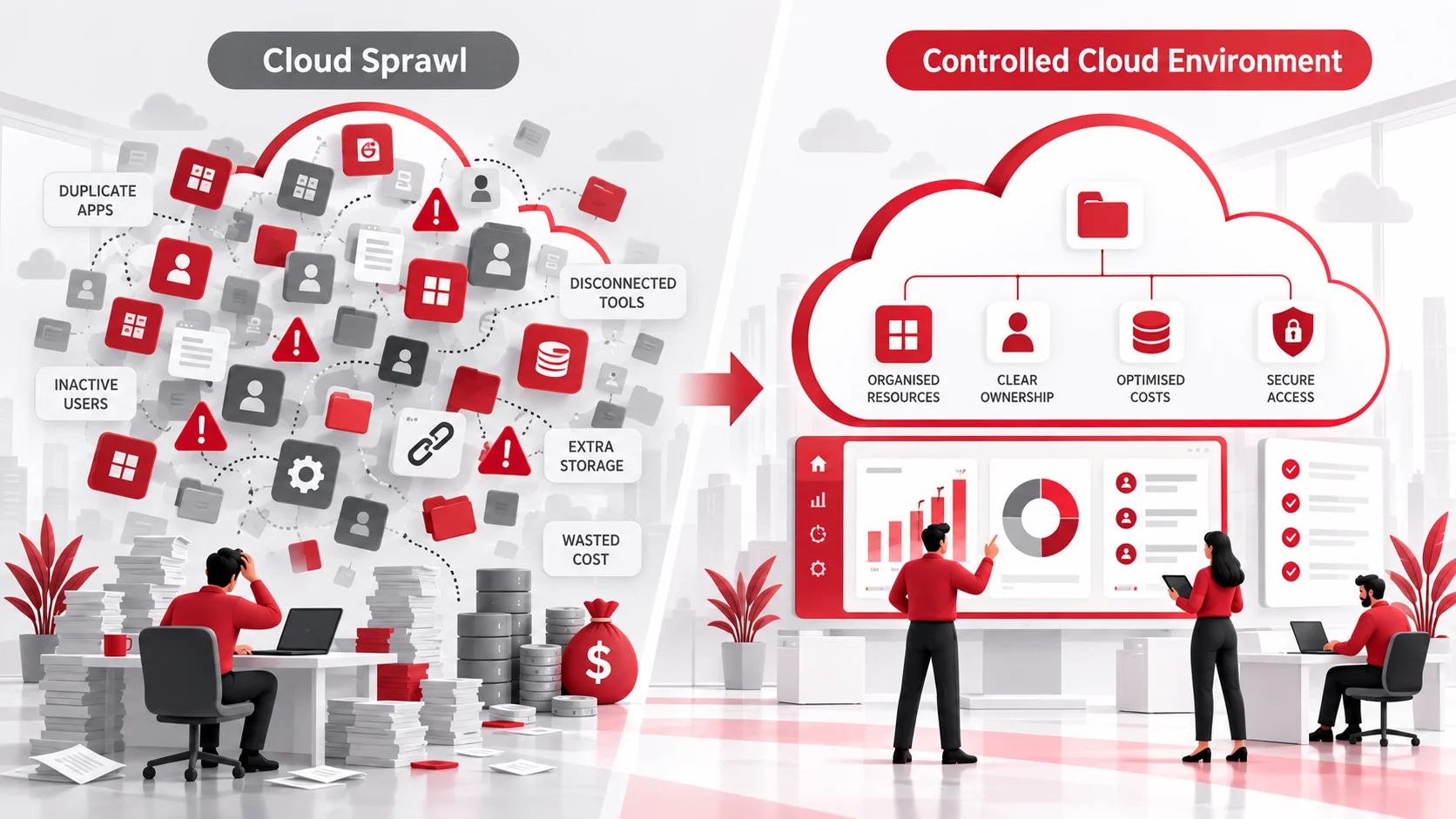
This challenge is known as cloud sprawl. Cloud sprawl happens when a business accumulates more cloud services and resources than it can effectively monitor and manage.
Without proper visibility, businesses may end up paying for unused services, keeping inactive accounts, or losing track of important resources. Controlling cloud sprawl helps organisations reduce unnecessary costs, improve security, and maintain a more organised cloud environment.
Key Takeaways
- Cloud sprawl occurs when businesses accumulate unmanaged cloud services and resources.
- Unused applications, inactive accounts, and duplicate tools can increase costs and security risks.
- Regular cloud reviews help identify unnecessary resources.
- Clear ownership and better visibility make cloud environments easier to manage.
- Managed IT support can help businesses optimise and maintain their cloud resources.
What Is Cloud Sprawl?
Cloud sprawl refers to the uncontrolled growth of cloud applications, accounts, services, and resources within a business environment.
As businesses grow, employees and teams often adopt new cloud tools to improve productivity. While these tools can provide benefits, problems can occur when there is no clear process for tracking, managing, or removing them.
Examples of cloud sprawl include:
- Multiple teams using different applications for the same purpose.
- Paying for software subscriptions that are no longer used.
- Keeping cloud storage or resources from completed projects.
- Maintaining inactive user accounts.
- Losing track of who manages specific cloud services.
Cloud sprawl is not caused simply by having many cloud services. The main issue is lack of visibility and control over those resources.
Why Does Cloud Sprawl Matter for Small Businesses?
For small businesses, unmanaged cloud growth can create unnecessary expenses and make technology harder to manage.
Increased Cloud Costs
One of the most common effects of cloud sprawl is wasted spending.
Businesses may continue paying for:
- Unused software subscriptions.
- Extra cloud storage.
- Inactive user accounts.
- Resources created for projects that have already ended.
Without regular reviews, these costs can continue unnoticed.
Reduced Visibility
As the number of cloud services increases, businesses may struggle to answer basic questions:
- What applications are currently being used?
- Who has access to each service?
- Which accounts are still active?
- Which resources are no longer needed?
Limited visibility makes it harder to manage cloud environments effectively.
Security Risks
Following cloud security best practices can help businesses identify risks, strengthen controls, and maintain better visibility across their cloud environments.
For example:
- Former employees may still have access to accounts.
- Forgotten applications may not receive updates.
- Unused resources may become overlooked security gaps.
The more unmanaged resources a business has, the harder it becomes to maintain proper security controls.
More Difficult Cloud Management
Managing a growing number of cloud platforms requires time and resources.
Without proper organisation, businesses may experience:
- More complex troubleshooting.
- Difficulty tracking ownership.
- Increased administrative workload.
- Inconsistent processes across different tools.
Common Causes of Cloud Sprawl

Rapid Adoption of Cloud Tools
Businesses planning cloud adoption should also consider their long-term structure and requirements when selecting a cloud architecture.
For example, a department may subscribe to a new project management platform without considering whether another existing tool already provides the same functionality.
Over time, multiple solutions can accumulate across the business.
Lack of Cloud Resource Tracking
Without a clear inventory of cloud services, businesses may lose track of:
- Active applications.
- User accounts.
- Storage resources.
- Subscription ownership.
A lack of tracking makes it difficult to identify what should be kept, removed, or reviewed.
Unused Resources
Cloud environments often contain resources that are no longer needed.
Examples include:
- Accounts from former employees.
- Software subscriptions from completed projects.
- Unused storage.
- Old testing environments.
Removing these resources helps reduce unnecessary costs and improves organisation.
Duplicate Cloud Services
Different teams may choose separate tools that perform similar functions.
For example, one department may use one communication platform while another uses a different solution with overlapping features.
Standardising tools where possible can simplify management and reduce unnecessary spending.
How to Control Cloud Sprawl
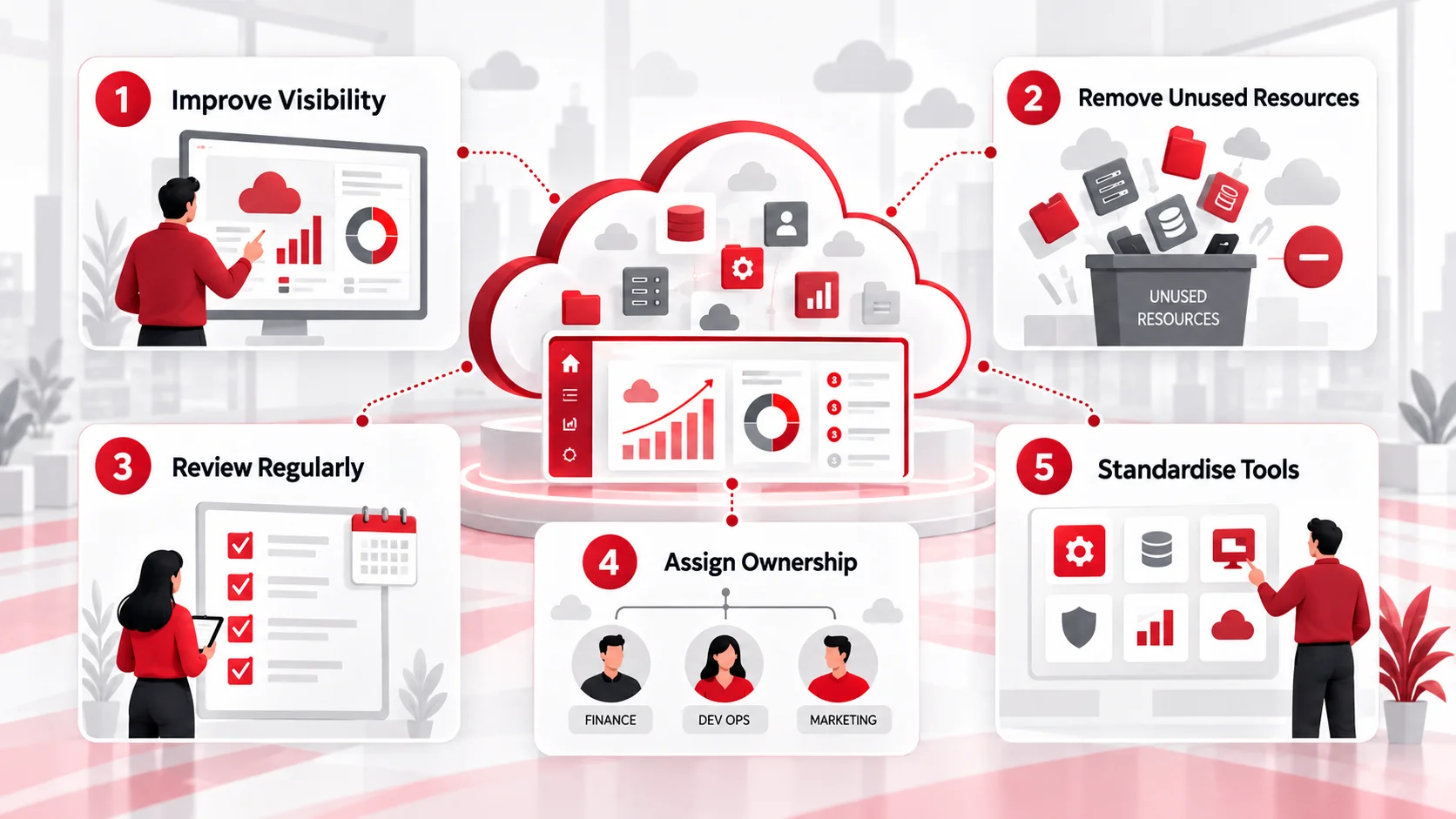
1. Improve Visibility Across Your Cloud Environment
The first step in controlling cloud sprawl is understanding what resources exist.
Businesses should maintain visibility into:
- Cloud applications being used.
- Active user accounts.
- Resource ownership.
- Subscription costs.
- Usage levels.
Knowing what exists makes it easier to identify unnecessary resources and improve management.
2. Identify and Remove Unused Resources
Regularly reviewing cloud resources helps businesses find items that are no longer needed.
This may include:
- Cancelling unused subscriptions.
- Removing inactive accounts.
- Deleting outdated storage.
- Retiring old project environments.
Removing unnecessary resources reduces waste and keeps cloud environments cleaner.
3. Review Cloud Usage Regularly
Cloud environments constantly change as businesses add new employees, applications, and services.
Regular reviews can help identify:
- New resources that need ownership.
- Services that are no longer being used.
- Unexpected increases in usage or costs.
- Outdated access requirements.
A scheduled review process helps prevent cloud environments from becoming difficult to manage.
4. Assign Clear Ownership of Cloud Resources
This is especially important in environments where multiple platforms and services are used, as proper identity and access management helps ensure only authorised users can access resources.
Clear ownership helps businesses:
- Know who manages each application.
- Track whether resources are still needed.
- Make better decisions about renewals and replacements.
Without ownership, resources are more likely to become forgotten or unmanaged.
5. Standardise Cloud Tools Where Possible
Using too many tools with overlapping functions can increase complexity.
Businesses can reduce cloud sprawl by:
- Choosing preferred platforms.
- Avoiding duplicate applications.
- Reviewing whether new tools provide additional value.
A smaller number of well-managed solutions is often easier to maintain than many disconnected platforms.
Cloud Sprawl vs Cloud Management: Understanding the Difference
| Cloud Sprawl | Controlled Cloud Environment | |
| Visibility | Limited awareness of resources | Clear understanding of applications and services |
| Costs | Higher risk of unnecessary spending | Better resource optimisation |
| Security | More unmanaged accounts and services | Easier monitoring and control |
| Management | More difficult to maintain | More organised and predictable |
Cloud sprawl occurs when businesses lose control over their cloud resources. Effective cloud management focuses on maintaining visibility, ownership, and efficient use of services.
How Managed IT Services Help Control Cloud Sprawl
As cloud environments become more complex, managing resources internally can become challenging.
A managed IT provider can help businesses:
- Review existing cloud applications and resources.
- Identify unused services and unnecessary costs.
- Improve visibility across cloud environments.
- Manage user access and permissions.
- Recommend ways to optimise cloud usage.
- Support ongoing cloud maintenance.
With the right support, businesses can maintain a more organised cloud environment while ensuring technology investments provide real value.
Conclusion
Cloud sprawl is a common challenge for businesses that rely on multiple cloud applications and services. The issue is not the number of cloud resources a company uses, but whether those resources are visible, managed, and still providing value.
By regularly reviewing cloud usage, removing unnecessary resources, assigning ownership, and standardising tools where possible, businesses can reduce wasted spending and maintain better control.
A well-managed cloud environment helps businesses stay efficient, secure, and prepared as their technology needs continue to grow.
FAQs
What is cloud sprawl?
Cloud sprawl occurs when a business accumulates cloud applications, accounts, and resources without enough visibility or management, making the environment harder to control.
What causes cloud sprawl?
Cloud sprawl is often caused by rapid adoption of cloud tools, lack of resource tracking, unused services, and different teams using separate platforms.
Why is cloud sprawl a problem for small businesses?
Cloud sprawl can increase costs, create security risks, reduce visibility, and make cloud environments more difficult to manage.
How can businesses reduce cloud sprawl?
Businesses can reduce cloud sprawl by reviewing cloud usage regularly, removing unused resources, assigning ownership, and standardising tools.
Does cloud sprawl increase security risks?
Yes. Unmanaged accounts, outdated applications, and forgotten resources can create additional security risks if they are not properly monitored.