Let’s face it, in today’s world, our businesses run on data. It’s the lifeblood flowing through every operation, from detailed customer profiles and carefully managed financial records to project files representing countless hours of hard work.
Imagine, for a moment, what would happen if that data suddenly vanished or, worse, fell into the wrong hands. The thought alone is enough to make any business owner break into a cold sweat. The consequences, both financial and reputational, can be devastating. That’s why understanding and implementing solid data protection isn’t just a good idea, it’s absolutely critical for building a strong, secure foundation for your entire operation.
In this blog, we’re going to pull back the curtain on the essential best practices in data protection. We’ll explore why each one truly matters and, most importantly, how you can actually put them into action within your own business, no matter its size.
Think of this as your practical guide to building a robust shield around your valuable information. Let’s dive in and empower you with clear, effective strategies to truly strengthen your data security.
Key Takeaways
- Identify and classify your data to prioritize protection
- Limit access and update permissions regularly
- Backup your data using secure, tested methods
- Train staff on security awareness and phishing prevention
- Use encryption, monitor for threats, and update systems frequently
- Prepare for incidents with a tested response plan
- Stay compliant with data protection regulations
- Get third-party assessments for an expert review
Data protection starts with knowing what to secure
You can’t protect what you haven’t identified. The first step is to understand where your critical data lives and who has access to it.
You should regularly classify your data by importance and sensitivity. This helps you prioritize what needs the strongest protection.
Control access to reduce risks
Access to sensitive data should be limited to the people who actually need it. Too many open permissions make your systems vulnerable.
Use role-based access controls and require approval for elevated permissions. Review access levels regularly and revoke them when roles change.
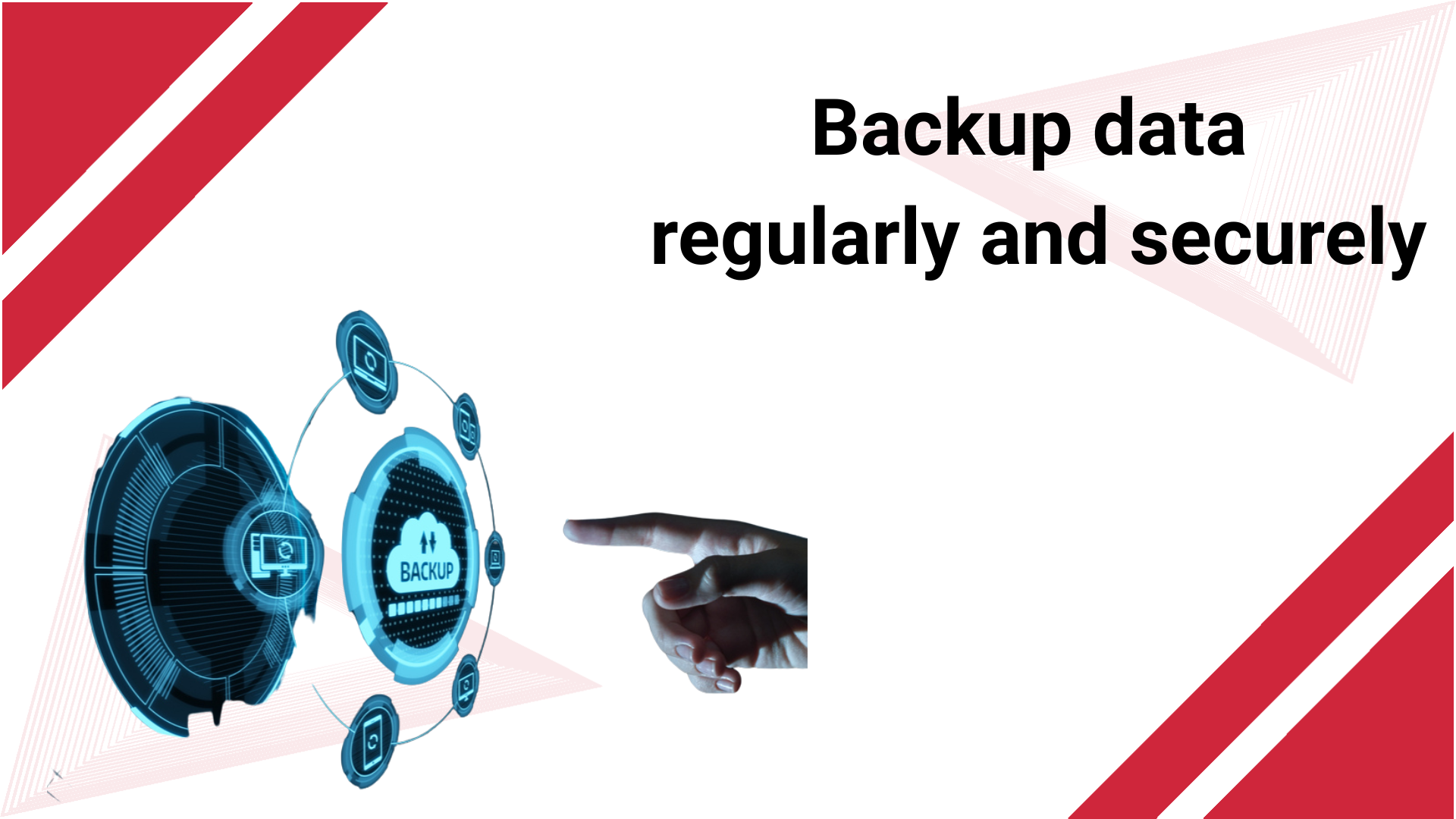
Backup data regularly and securely
Backups are your safety net. If your systems go down or data is lost, a reliable backup helps you recover quickly.
Follow the 3-2-1 rule: keep three copies of data, on two different media, with one stored offsite or in the cloud. Test backups often to ensure they work.
Train your team on security awareness
Most data breaches begin with human error. Employees may click on phishing links or mishandle information without realizing the risk.
Offer regular training on safe email practices, password habits, and how to report suspicious activity. Awareness is one of your best defenses.
Keep systems updated
Outdated software can have security holes that attackers exploit. Updates often include patches that fix these vulnerabilities.
Apply security updates to all devices, operating systems, and applications as soon as they’re available. Automate updates where possible.
Encrypt sensitive data
Encryption scrambles data so only authorized users can read it. This keeps data protected even if it’s intercepted or stolen.
Use strong encryption for data stored on devices and in transit over networks. Make sure encryption methods meet current security standards.
Monitor for threats continuously
Security tools should do more than block threats, they should alert you to unusual activity. This helps you catch problems early.
Use endpoint protection, firewalls, and intrusion detection systems. Review logs and set alerts for suspicious behavior.
Have a clear incident response plan
Even with strong protections, incidents can happen. You need a plan that outlines what to do when something goes wrong.
Assign roles, define steps, and test your response plan regularly. A fast and coordinated response can reduce damage and downtime.
Comply with data protection regulations
Laws like GDPR and HIPAA set rules for how businesses handle personal data. Non-compliance can lead to heavy fines and loss of trust.
Stay informed about the regulations that apply to your business. Maintain clear policies and documentation to prove compliance.
Consider third-party security assessments
Sometimes it’s hard to spot your own weaknesses. A security audit by an outside expert can reveal gaps in your defenses.
Assessments help you align with best practices and build a stronger data protection plan. This is especially useful before new product launches or compliance reviews.
Conclusion
Ultimately, data protection is so much more than just the tech you use. It’s about weaving together the right policies, people, and practices into the very fabric of your business. When you have a truly strong protection strategy in place, you’re not just reducing risks; you’re actively supporting compliance requirements and, most critically, ensuring your business stays up and running no matter what threats come your way. It’s about securing your peace of mind.
If you’re looking to elevate your current data protection setup or build a solid, reliable plan from scratch, we at Adivi are here to help guide you. Don’t hesitate to get in touch for expert support and security solutions that are genuinely tailored to fit your unique business needs.
Talk to Adivi today and take the confident step toward truly protecting your business.
FAQs
What’s the absolute best way to protect my business data?
Protecting data needs a layered defense with limited access, encryption, regular backups, and employee training. Multiple layers working together create the strongest protection.
How often should I really be backing up my business data?
Daily backups are essential for most businesses, especially if data changes frequently. Consider multiple backups daily depending on how much data loss you can tolerate.
Is putting my business data in the cloud actually secure?
Cloud storage can be secure if you choose the right provider with strong encryption and security controls. Research providers carefully to ensure your data is well protected.
Why is it such a big deal to train my employees on data protection? Can’t the tech just handle it?
Technology helps, but human error is a major cause of breaches like phishing. Training your team makes them the first line of defense and strengthens your data security.
What should a good data protection policy actually include?
A good policy explains how data is collected, used, stored, and who can access it. It also covers backups, incident plans, and compliance with data laws to keep your business safe.